Is CaixaForum Madrid Free?
No, CaixaForum Madrid charges general admission of around EUR 6, but it is completely free on four fixed dates each year and for several eligible groups. Here is exactly when and how to get in without paying.
Is CaixaForum Madrid Free?
No. CaixaForum Madrid charges general admission of around EUR 6 for its exhibitions, permanent and temporary alike, so it does not belong on a list of Madrid's genuinely free museums. The only fully free days are four fixed dates on the calendar, 15 May, 18 May, 9 November and one further date, plus standing free entry for CaixaBank clients, European Youth Card holders and under-16s. Everything else costs money.
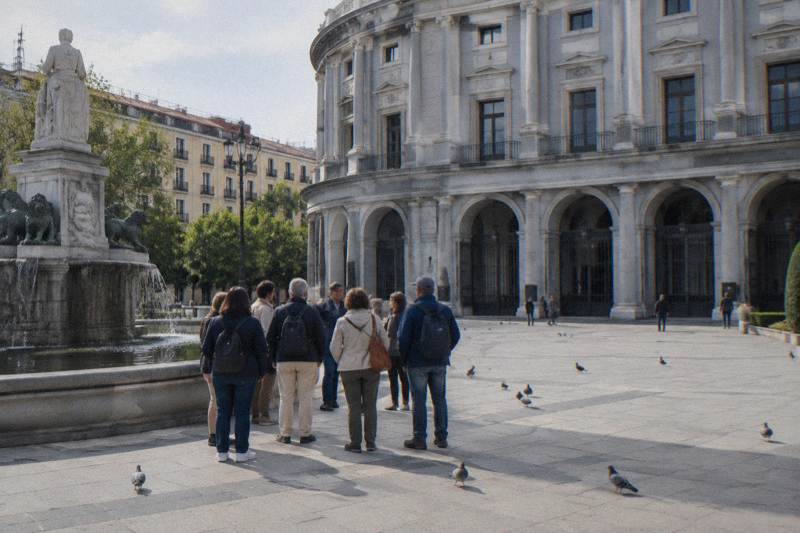
That is the plain answer, and it matters because CaixaForum sits in the one corner of Madrid where a visitor could easily assume the opposite. The building stands on Paseo del Prado, directly across from the Real Jardín Botánico and a few minutes' walk from the Museo del Prado, the Thyssen-Bornemisza and the Reina Sofía. Three of those neighbours have real free windows every single week. CaixaForum does not, and confusing the four buildings is the single most common budgeting mistake on this stretch of the art mile.
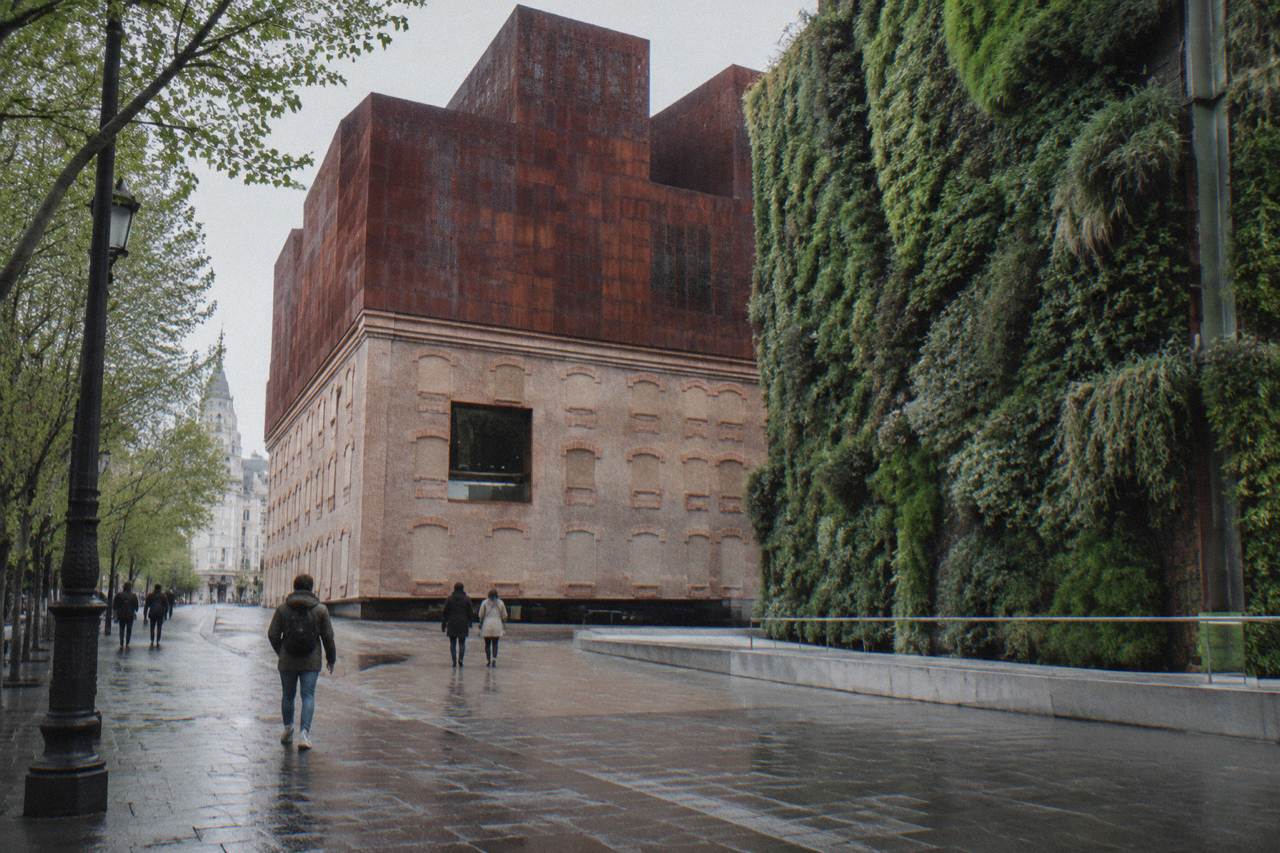
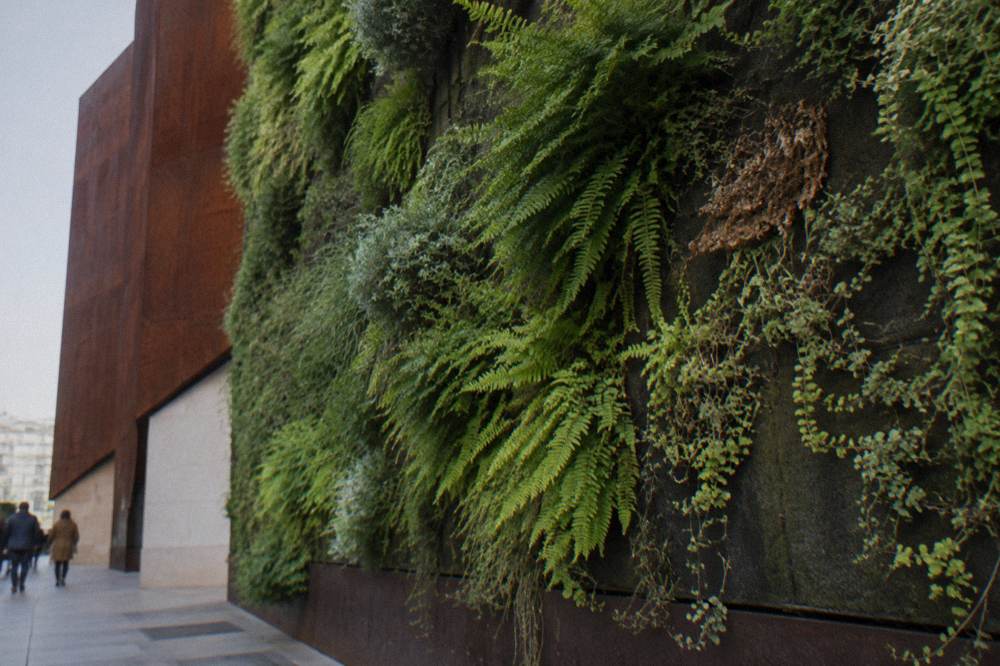
The venue itself is worth understanding even if you decide not to pay. It is a striking brick and rusted-iron structure raised on stilts above a public plaza, with a planted vertical garden climbing the wall of the neighbouring building. The plaza underneath, the terrace steps and the vertical garden are all publicly accessible without a ticket, which is a genuinely free experience, just not the same thing as free entry to the exhibitions inside.
If your plan for Madrid is built around free entry, the honest framing is this: treat CaixaForum's interior as a paid attraction with a handful of free exceptions, and spend your free-museum budget on the sites that actually offer it. This guide on Madrid's best free and budget museums lays out the full landscape, and the walking tours below cover the streets around the building for nothing up front.
What Does CaixaForum Admission Actually Cost?
General entry to CaixaForum Madrid is around EUR 6 per person, and that single ticket covers both the permanent spaces and the temporary exhibitions. There is no separate cheaper tier for the temporary shows, and no free last-two-hours window like the Prado or the Reina Sofía operate. Concessions exist for the usual groups, and children under 16 enter free at all times, but the standard adult price is the starting point for any visit.
The EUR 6 figure is the venue's own general rate for its exhibition programme, and unlike Madrid's state museums, CaixaForum has no weekly free evening. That is the structural difference to hold in your head: the Prado gives away its last two hours every day it is open, the Reina Sofía gives away its evenings Monday and Wednesday through Saturday plus a midday Sunday slot, while CaixaForum simply charges, full stop, except on its four annual free dates. The venue's own centre page states the pricing and eligibility rules plainly.
Opening hours run generally from 10:00 to 20:00, with exceptions around holidays and changeovers between exhibitions. If you are combining CaixaForum with the free evening slots at the state museums nearby, the sequencing works in your favour: the Reina Sofía's free window starts at 19:00 on its open evenings, so a paid afternoon at CaixaForum can roll straight into a free evening at the Reina Sofía with a ten-minute walk between them. The Prado's free entry is the last two hours before closing, 18:00 to 20:00 Monday to Saturday and 17:00 to 19:00 on Sundays and public holidays.
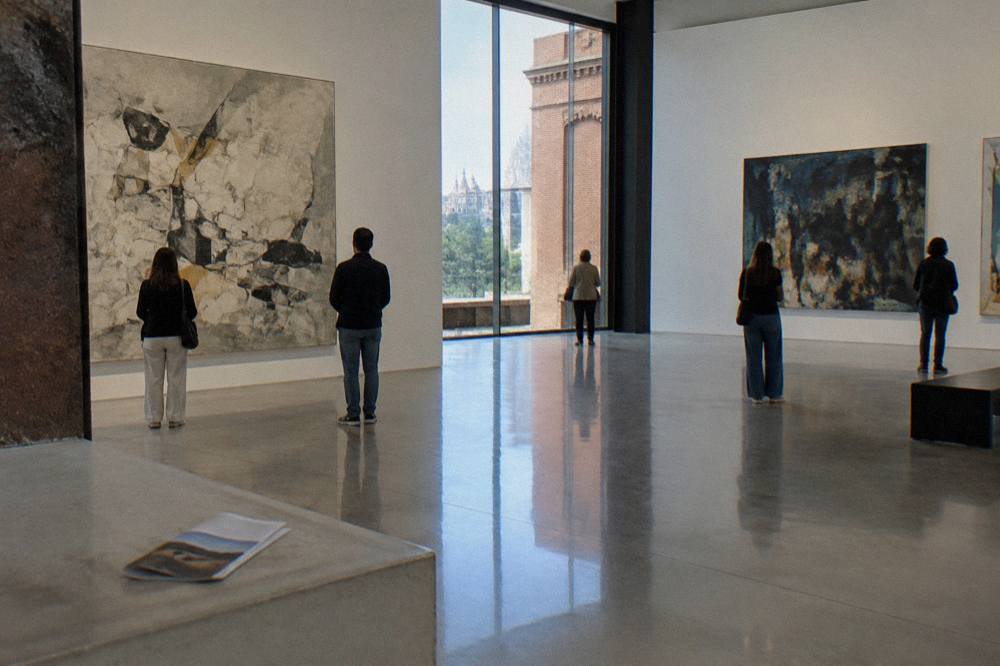
For context on what a paid ticket buys you in this city, the Prado's standard adult ticket is far higher than CaixaForum's, which is exactly why its free window is so prized. A useful planning reference is the Prado's free hours explained, which breaks down how the walk-up queue works in practice, because the free slots are capacity-limited and a line forms well before the doors open.
One thing worth saying in CaixaForum's defence: the EUR 6 price buys a rotating programme of often excellent temporary exhibitions that the free state museums do not match, since their free windows cover their permanent collections. If a particular show matters to you, six euros is a fair price. If you are just looking for art without a bill, walk next door.
When Is CaixaForum Madrid Free?
CaixaForum Madrid is free on four fixed dates each year: 15 May for San Isidro, 18 May for International Museum Day, and 9 November for the feast of Our Lady of Almudena, plus one further date on the venue's annual calendar. On those days admission is waived for everyone. There is no weekly free evening and no free final hour, so the calendar is the only route to a free ticket for an ordinary adult visitor.
The three named dates are the reliable ones, and they line up with city-wide rhythms worth planning around. San Isidro in mid-May is Madrid's biggest festival, when the whole city leans into processions, concerts and street events, many of them free. International Museum Day on 18 May is the day when institutions across the city open their doors, and it is the single best date on the calendar for a free-art marathon. The Almudena date in November connects CaixaForum to the cathedral whose patroness gives the day its name, and it typically coincides with free or reduced openings elsewhere.
The practical catch is crowds. Free days at popular venues draw locals and visitors in numbers the galleries do not see on an ordinary Tuesday, so arriving near the 10:00 opening is the sensible play, especially on 18 May. The queues move reasonably quickly, but the headline exhibitions fill up first.
If you are in Madrid outside those dates and want free art, the state-museum network is the answer, and it is generous. The Prado's free window is the last two hours daily. The Reina Sofía runs free entry from 19:00 to 21:00 Monday and Wednesday through Saturday, and 12:30 to 14:30 on Sundays, with the museum closed on Tuesdays, as the Reina Sofía's own free-entry information confirms. The Thyssen gives away its permanent collection on Mondays from 12:00 to 16:00. None of these require the calendar gymnastics that CaixaForum's free days do.
Who Gets Into CaixaForum For Free On Any Day Of The Year?
Three groups enter CaixaForum Madrid free on every day the venue is open, with no date restrictions: CaixaBank clients, holders of the European Youth Card, and everyone under 16 years old. The bank-client rule is the unusual one, and it is genuine, so a visitor who banks with CaixaBank can walk in on any afternoon. The under-16 rule makes the venue a practical pick for families.
The CaixaBank client perk surprises people, but it follows from what CaixaForum is: a cultural centre funded by a banking foundation, which uses free entry for its customers as part of the institution's public-facing mission. Proof of client status is asked for at the desk, so bring the card itself rather than an app screenshot if you want the process to be smooth. The European Youth Card works the same way, and under-16s are simply waved through with a paying or card-holding adult in the party.
For everyone else, the four calendar dates from the previous section are the whole offer. There is no resident discount comparable to the Royal Palace's free window for EU and Latin-American residents, and no pensioner or student free tier beyond the standard concession prices. If you do not fit one of the three groups and miss the four dates, the EUR 6 ticket is the only way in.
It is worth contrasting this with Madrid's municipal museums, because the two systems are mirror images. The Museo de San Isidro and the Museo de Historia de Madrid, both run by the city rather than the state, offer free general admission all year with no conditions at all. CaixaForum is the opposite shape: a private-foundation venue that charges by default and makes exceptions on named days. Treating the city's museums as one uniform "check the free hours" category is how budgets go wrong.
How Does CaixaForum Compare With Madrid's Genuinely Free Museums?
CaixaForum ranks near the bottom of the value list for a free-focused visitor, because its default state is paid. The Prado, Reina Sofía and Thyssen all offer reliable weekly free windows, the municipal museums are free every day, and several smaller state museums including the Cerralbo, the Romanticismo and the Arqueológico Nacional are free from Saturday afternoon through Sunday. CaixaForum's four annual dates cannot compete with that, unless one happens to fall on your trip.
The comparison table below puts the venue in its honest place among the nearby options. Every figure reflects the standing rules described above, and the distances are all within the Paseo del Prado and Austrias corridor, so the trade-off is genuinely between paying and walking ten minutes.
| Venue | Free entry | When | Distance from CaixaForum |
|---|---|---|---|
| CaixaForum Madrid | Four fixed dates per year | 15 May, 18 May, 9 November plus one further date; free daily for CaixaBank clients, Youth Card, under-16s | On site |
| Museo del Prado | Yes, capacity-limited | Last two hours daily, 18:00-20:00 Mon-Sat, 17:00-19:00 Sun and holidays | 5 minutes' walk |
| Museo Reina Sofía | Yes, individuals only | 19:00-21:00 Mon and Wed-Sat, 12:30-14:30 Sun, closed Tuesdays | 8 minutes' walk |
| Museo Thyssen-Bornemisza | Permanent collection only | Mondays 12:00-16:00 | 6 minutes' walk |
| Museo de Historia de Madrid | Free general admission | Every day, no conditions | Short Metro ride |
| Real Jardín Botánico | Free Tuesdays only | Tuesdays 10:00-13:30 | Directly opposite |
Two notes on the table. The botanical garden opposite CaixaForum is free only on Tuesday mornings, so the one pairing that looks natural on the map, CaixaForum plus the garden, only works for free on a Tuesday, and even then only before 13:30. And the Thyssen's famous Saturday evening slot covers temporary exhibitions only, which is a genuinely different fact from its Monday permanent-collection window.

The streets between these venues are themselves the best free product on the mile, and a good guide costs nothing. The Original Free Tour, a freetour.com walk rated 9.3 out of 10 across 21,435 reviews, starts at Plaza Mayor and runs 2 hours 30 minutes through the historic core in English and Spanish, covering the route you would otherwise pay a guide to explain. The tour page for The Original Free Tour lists the meeting point and current schedule. You pay what you want at the end.
If you prefer a walk that starts closer to CaixaForum's own neighbourhood, the Old Town Walk, Five Languages, a GuruWalk tour rated 4.92 out of 5 across 10,008 reviews, meets at Kilometer Zero in Puerta del Sol and covers the Austrias quarter in 2 hours 15 minutes with commentary available in English, Spanish, French, Italian and Portuguese. It is the largest single GuruWalk walk on this site's roster, and it threads straight past the Royal Palace and the gardens that sit at the paid end of this comparison.
Is The Vertical Garden And Plaza Free To See?
Yes, the planted wall and the raised plaza underneath CaixaForum are free and openly accessible at any time, no ticket required. The vertical garden is attached to the neighbouring building rather than the museum itself, and the plaza beneath the stilted structure is designed as an open urban space. You can see the building's exterior, the garden wall and the plaza without paying anything, one of the better free photo stops on the Paseo del Prado.
This is the fact that softens the "no" at the top of the page. Many visitors come away thinking they experienced CaixaForum when what they actually experienced is its exterior, and that exterior is legitimately one of the most photographed contemporary structures in central Madrid. The wall is a living plantation of thousands of individual plants set into a scaffold, and it changes with the seasons, so it looks different in March than it does in October.
The plaza beneath hosts occasional free events, installations and performances, depending on the venue's programme, and the steps leading up to the entrance are a standard resting spot for walkers doing the art-mile circuit. At street level, the corner of Paseo del Prado where CaixaForum stands is within sight of the botanical garden's gates and a short stroll from the Plaza de Cibeles, whose CentroCentro cultural centre is free to enter even though the rooftop mirador above it charges about EUR 4, a two-products-one-building situation this corner of Madrid specialises in.
So the honest split is this: the architecture and its planting, free always; the exhibitions inside, about EUR 6 with four exceptions a year. A visitor with no interest in the shows loses nothing by treating the exterior as the attraction.
Is CaixaForum Worth The Entry Fee?
For most free-focused visitors, no, because the same EUR 6 buys alternatives elsewhere and the surrounding museums give art away nightly. For visitors who care about a specific temporary exhibition, or who qualify for one of the standing free categories, yes, because the programme is strong and the building itself is part of the experience. The decision hinges on whether the current exhibition line-up matters to you personally.
The case for paying is the programme. CaixaForum's temporary exhibitions are frequently the most ambitious in the city outside the Prado and the Reina Sofía, covering photography, design, ancient cultures and contemporary art with production values that smaller venues cannot match. Six euros for a well-built show in a remarkable building is not a bad deal; it is simply not a free thing to do in Madrid, and Free Things To Do In Madrid exists to keep those two categories separate.
The case against paying is opportunity cost. On any given evening, the Reina Sofía is free from 19:00, and the Prado is free in its final two hours. The municipal museums are free all day, every day. If your Madrid budget is built around spending nothing, CaixaForum's interior is the thing you skip, and its exterior is the thing you keep. A well-planned free day is outlined in this one-day Madrid itinerary, which sequences the free windows so that nothing on the route requires a ticket.
There is a middle path worth naming: the four free dates. If your trip happens to overlap 15 May, 18 May or 9 November, CaixaForum becomes one of the best free visits in the city for that single day, and the surrounding festival atmosphere on the May dates adds to it. Madrid's Otra Mirada heritage open days in mid-October work the same way, throwing open buildings that are normally closed, and it is worth checking whether your dates catch either window.
The last word on value belongs to the walkable context. Whatever you decide about the ticket, the Paseo del Prado corridor is the densest concentration of free art, free architecture and free gardens in Madrid, and the walks below cover it at no fixed price.
Common Questions About CaixaForum Madrid
Is CaixaForum Madrid Free?
No. General admission is around EUR 6 for the exhibitions. The venue is fully free only on four fixed annual dates, 15 May, 18 May and 9 November among them, and at all times for CaixaBank clients, European Youth Card holders and visitors under 16.
Does CaixaForum have a free evening like the Prado?
No. Unlike the Prado's free final two hours or the Reina Sofía's free evening window, CaixaForum has no weekly free slot at all. The only free days for the general public are the four fixed calendar dates each year.
Can you see the CaixaForum vertical garden for free?
Yes. The planted vertical garden and the raised public plaza beneath the building are freely accessible at all times, with no ticket required. Only the exhibition spaces inside charge admission.
Is CaixaForum free on International Museum Day?
Yes. 18 May is one of the venue's fixed free dates, tied to International Museum Day. Expect larger crowds than usual, and arrive close to the 10:00 opening for the best chance at the headline exhibitions.
Are children free at CaixaForum Madrid?
Yes. Visitors under 16 enter free on every day the venue is open, not only on the free dates. CaixaBank clients and European Youth Card holders also enter free daily with proof of eligibility.