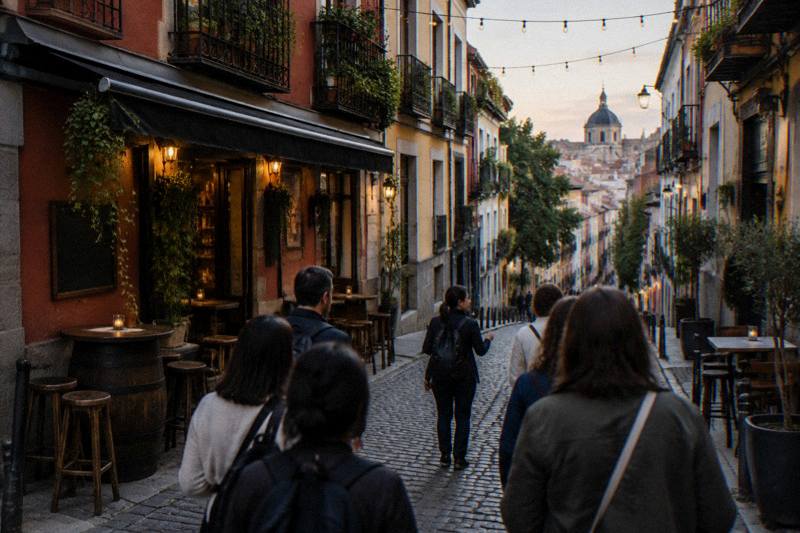
Is Madrid Expensive To Visit?
A real cost comparison of Madrid against Barcelona and Paris, plus the free layer of museums, parks and pay-what-you-want walking tours that changes the answer for budget travellers.
Is Madrid Expensive To Visit?
No, Madrid is not expensive by the standards of Western Europe's capital cities. Lodging, food and public transport all run below Paris and broadly level with or slightly under Barcelona, and Madrid adds an unusually deep free layer: free-window entry at the state museums, free municipal museums year-round, and pay-what-you-want walking tours that cost whatever you decide to tip.
The honest answer depends on what you compare it with. Against London or Paris, Madrid feels noticeably cheaper: a metro ride, a menu del dia lunch and a glass of wine at a neighbourhood bar all cost less than their equivalents further north. Against Lisbon or Seville, Madrid is the pricier city, though not by a dramatic margin. The Spanish capital occupies a comfortable middle position, and it is a middle position with a twist, because Madrid gives away more of itself for free than almost any comparable capital.
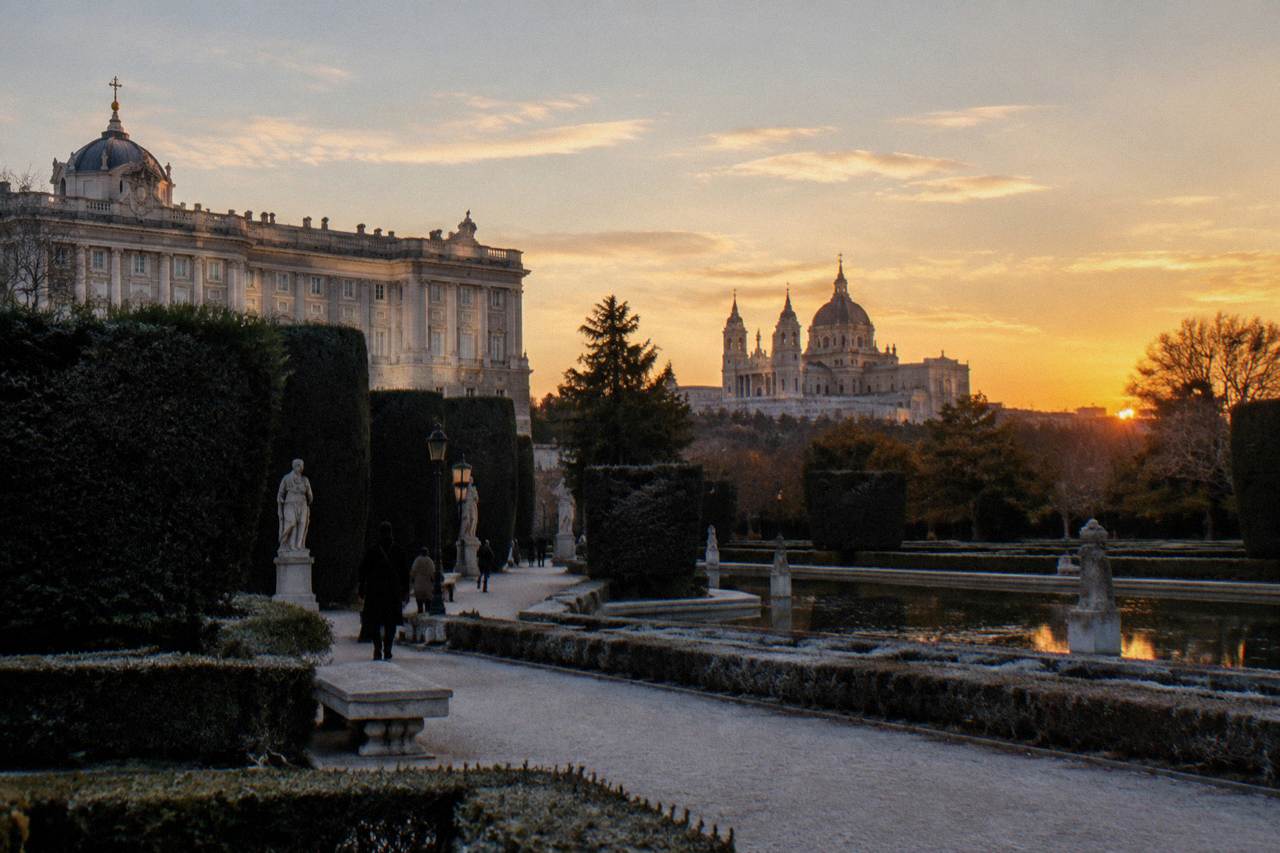
That free layer is the reason this site exists, and it is not a thin one. Two of the three big state art museums, the Prado and the Reina Sofía, open their collections for free in daily two-hour windows. The municipal museums, including the Museo de Historia de Madrid and the Museo de San Isidro, are free year-round with no conditions at all. The Retiro, Casa de Campo, Madrid Río, the Sabatini Gardens and the Templo de Debod viewpoint all cost nothing. A traveller who plans around these openings can strip an enormous amount out of a daily budget without skipping the city's signature sights.
Orienting yourself costs nothing too. The Original Free Tour of Madrid runs on freetour.com, covers Plaza Mayor, Puerta del Sol and the Habsburg old town over two and a half hours, and is rated 9.3 out of 10 across 21,435 freetour.com reviews. You pay what you want at the end, which makes it the cheapest possible first evening in the city.
There is also a large GuruWalk presence in Madrid, which matters for cost planning because every one of those walks works on the same pay-what-you-want model. The biggest single GuruWalk walk in the city, the Old Town Walk, Five Languages, is rated 4.92 out of 5 across 10,008 GuruWalk reviews and covers the same historic core in five languages. Between freetour.com and GuruWalk, a visitor can walk the centre with a local guide on several consecutive days and never pay a fixed price for any of it.
How Do Madrid Prices Compare With Barcelona And Paris?
On like-for-like basics, Madrid is cheaper than Paris on almost everything and marginally cheaper than Barcelona on accommodation and eating out. The gap with Paris is large; the gap with Barcelona is real but modest. Where Madrid pulls decisively ahead of both is free sightseeing: no other city of the three gives away a comparable share of its headline attractions.
Paris is in a different price universe. Hotel rates, restaurant mains, museum tickets and transport all cost substantially more, and the major Paris museums have no standing free window for the general public, only free monthly late openings that require queuing. Barcelona shares Madrid's tapas-and-menu-lunch culture, so the eating-out gap is small, but Barcelona's hotel and apartment prices have been pushed up harder by overtourism, and its headline sights, the Sagrada Família and Park Güell among them, are paid attractions with no free equivalent window.
Madrid's headline sights behave differently. The Prado's collection is free in the last two hours before closing every day it is open, Monday to Saturday from 18:00 to 20:00 and Sundays and public holidays from 17:00 to 19:00, as confirmed on the official Reina Sofía free-entry guidance for the state-museum network's shared pattern. The Reina Sofía runs its own free slots, Monday and Wednesday to Saturday from 19:00 to 21:00 and Sundays from 12:30 to 14:30, plus full free days on fixed dates including 18 April, 18 May, 12 October and 6 December. Neither city on the French model offers anything comparable.
| Cost item | Madrid | Barcelona | Paris |
|---|---|---|---|
| City-centre 3-star hotel night | Mid-range for Western Europe | Slightly above Madrid | Substantially above both |
| Lunch menu del dia | Widely available at neighbourhood prices | Comparable, marginally higher | No equivalent culture; brasserie lunch costs more |
| Headline art museum | Prado free in daily two-hour window | Paid, no standing free window | Paid; free only at monthly late openings |
| Main city park | Retiro, free, all areas | Park Güell's monumental zone is ticketed | Paid gardens exist; free parks are smaller |
| Guided orientation walk | Pay-what-you-want, freetour.com and GuruWalk | Pay-what-you-want walks exist, smaller roster | Tipped walks exist but free-tour culture is thinner |
| Rooftop viewpoint | Mirador Madrid, about EUR 4 | Paid, several options | Paid, substantially more |
The table is a planning comparison rather than a price list: exact hotel and menu figures move with the season, so treat the relationships as the stable fact and check current numbers when you book. The structural point does not move: Madrid is the only one of the three where the top-rank art collection and the main park are both free at the point of entry.
If you want the comparison laid out as a day plan rather than a table, the free one day Madrid itinerary walks the whole centre without a single mandatory ticket, and the Madrid on a budget guide covers the cheaper side of eating, sleeping and getting around.
What Does A Day In Madrid Actually Cost?
A well-planned day in Madrid can run from almost nothing, if you build it on free museum windows, parks and pay-what-you-want walks, to a comfortable mid-range spend on a hotel, paid museum slots and restaurant dinners. The honest range is wide because the free layer is optional: Madrid is only expensive if you choose to pay for things the city also gives away.
Start with the floor. Morning in the Retiro, free. The Palacio de Velázquez, one of the park's two exhibition pavilions, reopened on 24 June 2026 after rehabilitation and is free to enter, a genuinely fresh fact that most guidebooks have not caught up with. Afternoon in the old town on a GuruWalk or freetour.com walk, pay what you want. Evening in the Prado's free window. Add a supermarket picnic or a low-cost bar snack and the day's fixed spend can sit close to zero beyond lodging and transport.
The mid-range version of the same day swaps in paid morning museum slots, a sit-down lunch, a paid rooftop and a restaurant dinner, and lands at a normal Western European city cost. What Madrid does not do is force you up to that tier. The Almudena Cathedral, its crypt, the Sabatini Gardens, the Campo del Moro, Madrid Río and the whole Casa de Campo park are free with no conditions, and the cathedral's standard daily hours are confirmed on the official cathedral page, with only an optional EUR 1 donation requested at the crypt.
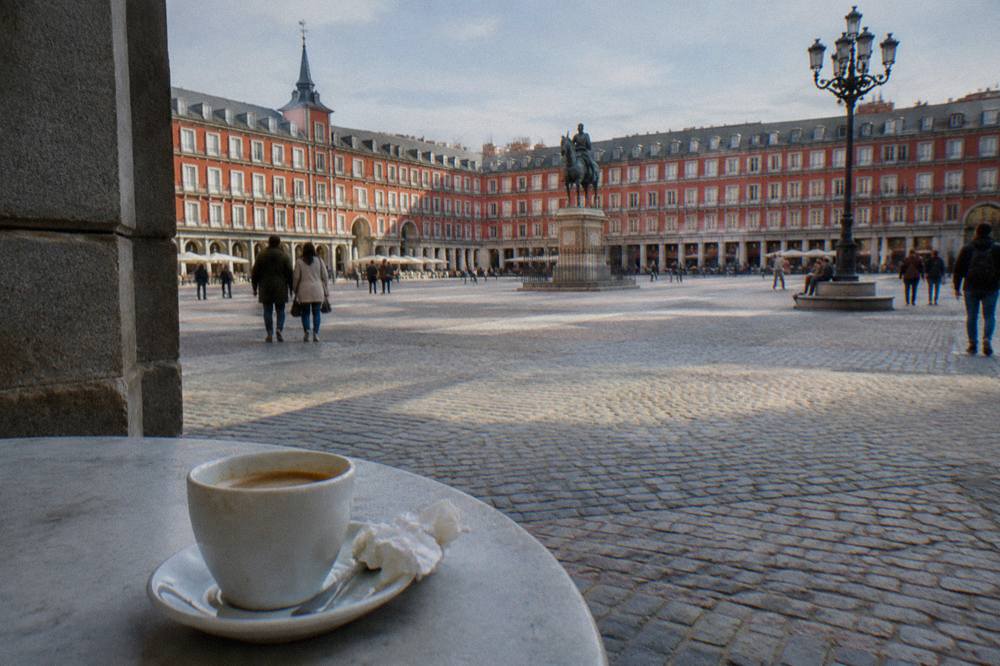
The one thing worth flagging is the cable car and the zoo: Casa de Campo the park is free, but the Teleférico cable car that crosses to it and the Zoo Aquarium inside it are separately and substantially ticketed. Budget travellers should treat those as paid attractions that happen to sit inside a free park, not as part of the free layer. The same split applies at Palacio de Cibeles, where the CentroCentro cultural centre inside is free but the Mirador Madrid rooftop in the same building costs about EUR 4.
Where Does The Free Layer Change The Budget Math?
The free layer changes the math at the museum line and the tour line, which are usually the two most expensive lines in a city-trip budget. In Madrid both lines can be driven to zero or near-zero without skipping the city's most famous sights, which is what separates it from Barcelona and Paris.
Consider the museum line first. In Paris, the museums are a fixed, unavoidable cost for anyone who wants the Louvre or the Musée d'Orsay. In Madrid, the Prado, the Reina Sofía and the Thyssen all have standing free windows, and the smaller state museums, the Romanticismo, the Cerralbo, the Arqueológico Nacional and the Museo del Traje, are free from Saturday afternoon and all day Sunday plus four fixed bonus dates. The Cerralbo adds a free Thursday evening slot from 17:00 to 20:00. The catch is capacity: the free windows are queue-based and popular, so the cost you pay is time, not money. The trade is a fair one for budget travellers and a poor one for anyone on a tight schedule. The rest of the planning pages sit on Free Things To Do In Madrid.
The tour line disappears entirely. This is the single biggest structural difference between Madrid and most comparable capitals. The pay-what-you-want model, run in Madrid on both freetour.com and GuruWalk, means the price of a guided walk is set by the visitor after the walk ends. The Original Free Tour of Madrid on freetour.com is rated 9.3 out of 10 across 21,435 reviews, and the Old Town Walk, Five Languages on GuruWalk is rated 4.92 out of 5 across 10,008 reviews; between them they cover the Plaza Mayor, Puerta del Sol and the Habsburg core with thousands of reviews of standing. Neither has a fixed price.
The Old Town walk in particular is the one to build a budget day around. It meets at Kilometer Zero in the centre of Puerta del Sol, runs two hours 15 minutes, and is the largest single GuruWalk walk in the city, rated 4.92 out of 5 across 10,008 GuruWalk reviews in five languages, English, Spanish, French, Italian and Portuguese. If you take one paid-for-nothing experience in Madrid, this is the template.
Beyond the walks and the museums, the free layer keeps going: the Naval Museum, the Biblioteca Nacional's exhibition space, the Goya frescoes at the Ermita de San Antonio de la Florida, the state botanical garden's free Tuesday morning from 10:00 to 13:30, and browsing at El Rastro and the Mercado de San Miguel, both free to wander. The Templo de Debod is the clearest two-fact case in the city: the park, the exterior and the famous sunset viewpoint are always free, while the temple interior is also free but gated by a mandatory advance timed reservation, so the constraint is booking rather than money.
How Much Should You Budget For Food And Drink?
Food is where Madrid rewards budget discipline more than any other line. The menu del dia lunch culture, the tapas-with-a-drink habit and the free-layer sightseeing mean a realistic food budget can be small without eating badly, but the same city also has a full-price fine-dining tier if you want it.
The structural advantage is the menu del dia, the fixed-price weekday lunch that Spanish cities do as a matter of course and that has no real Parisian equivalent. Add to that the tapas culture, where a small dish routinely comes with a drink at neighbourhood prices, and a visitor eating like a local spends noticeably less than a visitor eating like a tourist. The rule of thumb is simple: the further you sit from Plaza Mayor and the Puerta del Sol, the cheaper and often better the food gets. La Latina, Malasaña and the streets off the Rastro are the budget side of the centre.
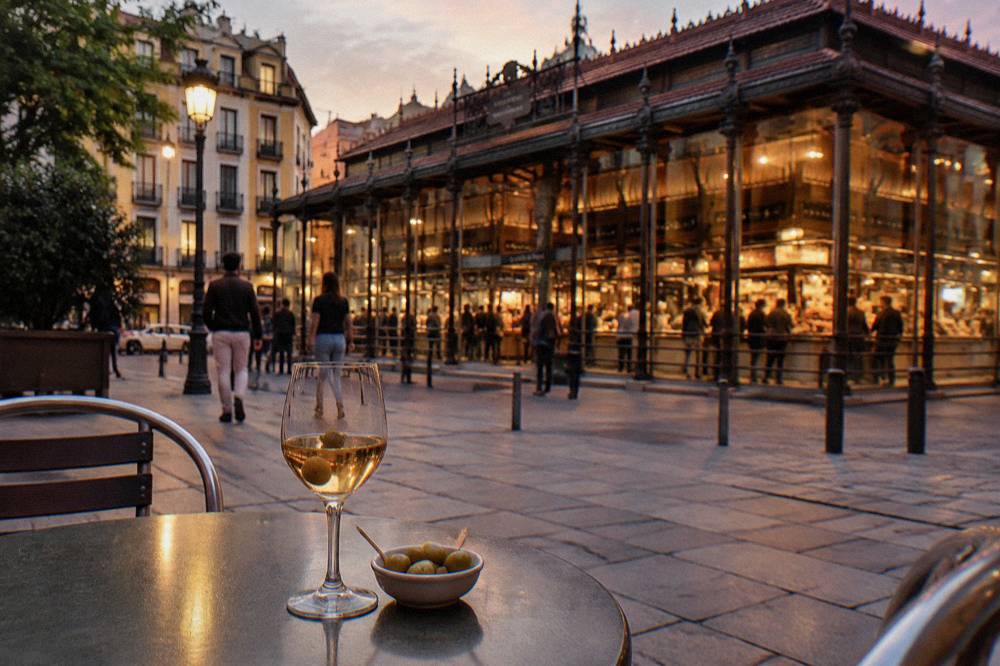
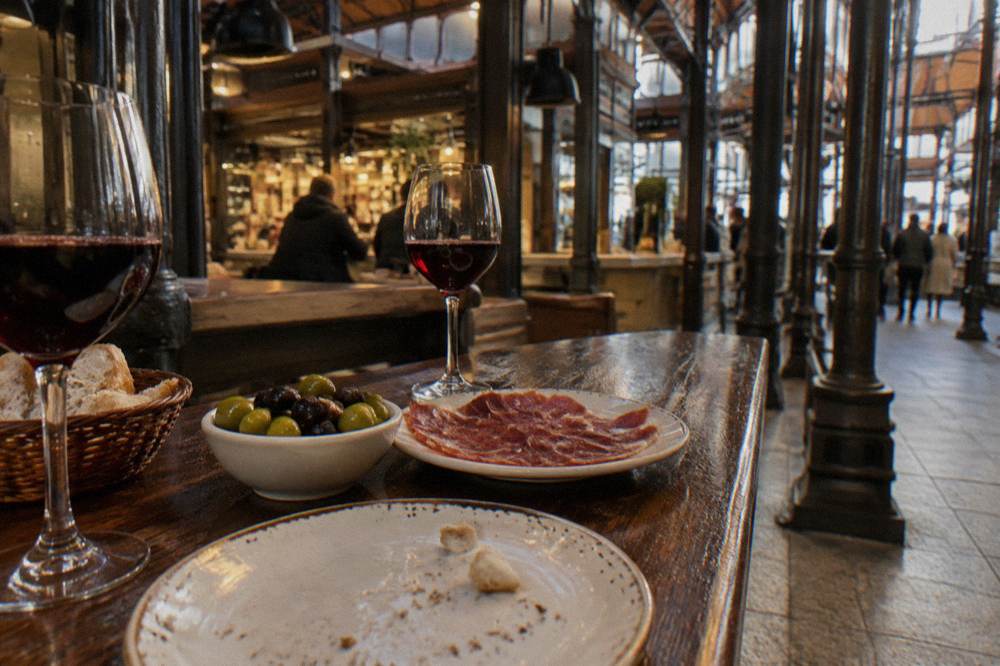
Drinks follow the same pattern. A caña at a neighbourhood bar is one of the cheapest beers in Western Europe, and the terrace mark-up in the tourist core is the thing to avoid, not the beer itself. The Mercado de San Miguel is the clearest example of the two-tier city: browsing the beautiful iron-and-glass market is completely free, but the stalls inside are priced for the setting, so treat it as a free sightseeing stop rather than a budget dinner.
For the paid side of culture and food combined, CaixaForum Madrid is the honest middle case: general entry is EUR 6, with free days only on four fixed annual dates, 15 May, 18 May and 9 November, plus free entry for CaixaBank clients, European Youth Card holders and under-16s, per the official centre information. That is the shape of most Madrid extras: a modest, clearly stated price with a narrow free channel, not a Paris-style ticket wall.
If you want the deeper answer on whether the city justifies even a modest budget, the companion piece is Madrid worth visiting makes the case, and the free walking tour Madrid guide explains how the pay-what-you-want system works in practice, including what to tip.
Is Madrid Expensive Compared To Other Spanish Cities?
Within Spain, Madrid is pricier than Seville, Granada or Valencia on accommodation and eating out, roughly level with Barcelona, and cheaper than the coastal resort peaks in high summer. For a capital city it is unusually kind to budget travellers, and its free layer is the deepest of any Spanish city.
The domestic comparison matters because many visitors arrive in Madrid after, or before, Andalusia. Seville and Granada both undercut Madrid on hotel rates and restaurant prices, and Valencia is broadly similar on food and cheaper on lodging. None of them, however, matches Madrid's free-museum network: the daily Prado and Reina Sofía windows, the year-round free municipal museums and the sheer number of pay-what-you-want walks on GuruWalk and freetour.com, 21 shipped walks across the two platforms, have no equivalent in any other Spanish city. Barcelona has tipped walks too, but a smaller roster and a paid headline-sight layer that Madrid simply does not have.
The seasonal factor is the last piece. Madrid's peak pricing follows the calendar rather than the beach: summer hotel rates rise during the Veranos de la Villa festival weeks and again around the October heritage events, while February and the shoulder months of March and November are the cheapest times to sleep in the centre. Since so much of the sightseeing layer is free year-round, the seasonal swing in the total trip cost is driven almost entirely by the room rate, which makes Madrid a genuinely flexible city to visit cheaply: pick the off-peak weeks, build the days on the free windows, and the city ranks among the least expensive capitals in Western Europe.
Common Questions About Visiting Madrid On A Budget
Is Madrid Expensive To Visit?
No. Madrid is cheaper than Paris on almost every line and marginally cheaper than Barcelona on lodging and eating out. Its free layer, including daily free windows at the Prado and Reina Sofía, free municipal museums and pay-what-you-want walking tours, means the sightseeing budget can be driven close to zero.
How much does a walking tour in Madrid cost?
Nothing is fixed. The walks featured on this site run on freetour.com and GuruWalk, both pay-what-you-want platforms: you tip the guide at the end. The Original Free Tour on freetour.com is rated 9.3 out of 10 across 21,435 reviews, and the Old Town Walk on GuruWalk is rated 4.92 out of 5 across 10,008 reviews.
Can you visit the Prado for free?
Yes. The Prado's collection is free in the last two hours before closing, Monday to Saturday from 18:00 to 20:00 and Sundays and public holidays from 17:00 to 19:00, subject to capacity. You queue for a walk-up ticket; the cost is time, not money.
Is food expensive in Madrid?
It does not have to be. The menu del dia lunch culture and tapas-with-a-drink habit keep eating costs low away from the tourist core. Browsing the Mercado de San Miguel is free, though its stalls are priced for the setting.
What is the cheapest time of year to visit Madrid?
February and the shoulder months of March and November typically have the lowest central hotel rates. Because so much of Madrid's sightseeing layer is free year-round, the room rate is the main seasonal variable in total trip cost.
Are Madrid's parks free?
Yes. The Retiro, Casa de Campo, Madrid Río, the Sabatini Gardens, Campo del Moro and Parque del Oeste are all free to enter. Note that the cable car to Casa de Campo and the Zoo Aquarium inside it are separately ticketed, and the Palacio de Cristal in the Retiro is closed for renovation until around July 2027.