Is Almudena Cathedral Free To Enter?
Yes, the nave and crypt of Almudena Cathedral are free to enter, with an optional donation in the crypt. Here is exactly what costs money and how to plan the visit.
Is Almudena Cathedral Free To Enter?
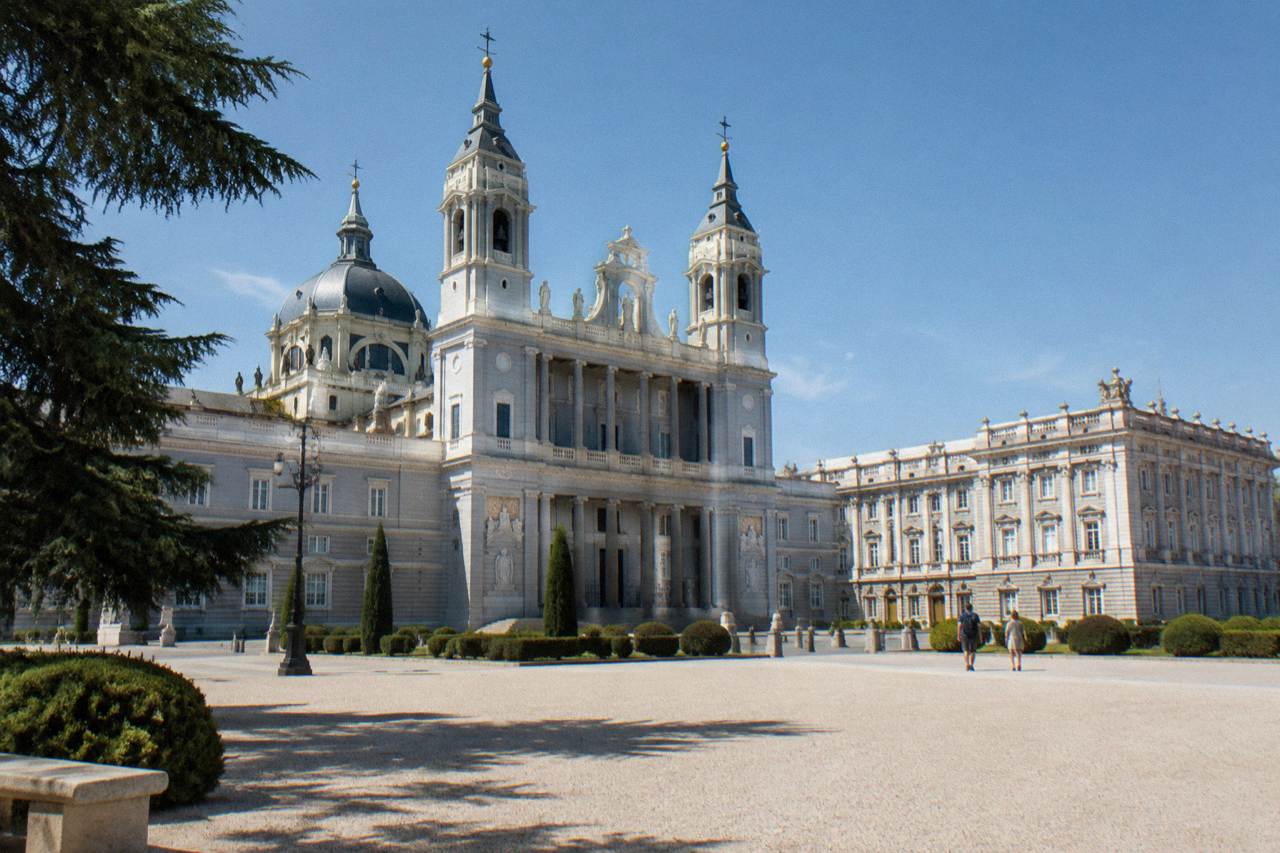
Yes, the main nave of the Catedral de la Almudena is free to enter during opening hours, and the crypt below is also free, with an optional 1 euro donation requested at the crypt door. The cathedral museum and any guided tour are separately paid. No ticket is needed for the church itself, and there is no compulsory donation at the main entrance.
That three-part split is the single most misunderstood thing about the building. Visitors arrive expecting either a fully free monument or a fully ticketed one, and it is neither. The nave is a working church, open for worship and visits without charge. The crypt, which sits directly beneath the nave and holds the remains of Madrid's patron saint alongside a striking neo-Romanesque ceiling, asks for an optional 1 euro contribution. The museum, reached by a separate entrance and a lift to the upper levels, sells its own tickets, as does any guided visit that bundles the trio together.
The cathedral's own visitor page confirms the standard daily hours and the donation-based crypt arrangement, and it is worth a quick read before you go because the church closes to tourists during mass times. Find it at the cathedral's official site. Nothing about the free entry is conditional on residency or nationality, a sharp contrast with the ticketed monument standing beside it.
The building is younger than it looks, and the interior shows it: austere stone gives way to a strikingly modern rainbow-coloured ceiling over the nave, the work of contemporary artists engaged late in a long and repeatedly interrupted construction. The mix surprises visitors expecting a Gothic interior, and it is worth knowing in advance so the contrast reads as deliberate rather than unfinished. None of it affects the price, which remains nothing for the nave.
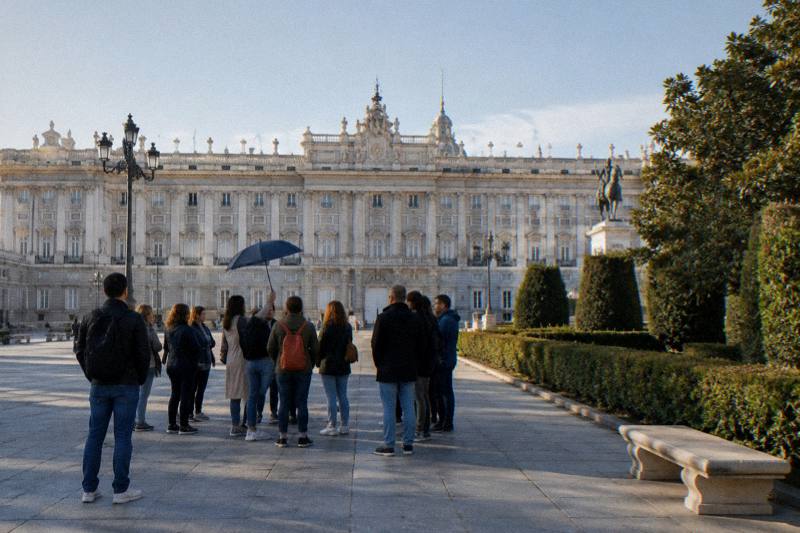
Because the cathedral sits at the heart of the Habsburg old town, most visitors combine it with Plaza Mayor, the Royal Palace and the Sabatini Gardens in a single walking loop. That loop is exactly what the city's free walking tours cover, and the trio below are the walks most worth comparing if you want a guide to frame the history rather than simply wandering.
What Parts Of The Cathedral Complex Cost Money?
The free parts are the nave and the crypt. The paid parts are the cathedral museum, accessed by a separate entrance, and any official guided tour of the complex. The museum sells its own tickets with its own opening hours, which do not always match the church's, so a museum visit needs separate planning from a nave visit.
The cleanest way to see the split is a table. Every row below is a distinct product with its own entrance, hours and price logic, and treating them as one bundled attraction is how people end up paying for something they assumed was included.
| Part of the complex | Entry cost | How it works |
|---|---|---|
| Main nave | Free | Open during visitor hours, closed to tourists during mass |
| Crypt | Free, optional 1 euro donation | Separate entrance, holds the tomb of Madrid's patron saint |
| Cathedral museum | Paid ticket | Separate entrance and hours, reached via lift to the upper levels |
| Guided tours | Paid ticket | Offered separately, often bundling nave, crypt and museum |
One practical note: the museum's hours are shorter and less predictable than the nave's, and the combination of a paid museum with a free church means the queue behaviour differs too. The nave line moves quickly because there is no ticket check, only a security glance, while the museum desk can move slowly on busy days. If your time is short, do the nave and crypt first, both free, and treat the museum as optional.
The Royal Palace next door operates on an entirely different logic, and it is the comparison most visitors need spelled out. Its free window is limited to EU and Latin American residents, collected in person at the ticket office, and capacity-limited, so everyone else buys a ticket. The palace's roof renovation entered its final phase in 2026 and the visitor access route shifted in August 2026 to the Almudena Cathedral esplanade and Plaza de la Armería, so the two monuments now share an arrival point. Details of palace visits are on Patrimonio Nacional's official site.
If you would rather have a local guide walk you through the cathedral quarter and the stories around it, the free tours that pass closest are worth a look. The Original Free Tour on freetour.com, rated 9.3 out of 10 across 21,435 freetour.com reviews, meets at Plaza Mayor in front of the Tourist Information Centre and runs about 2 hours 30 minutes in English and Spanish, covering the Habsburg streets that lead down to the cathedral itself.
A guide adds something the free entry cannot: the building's signage is thin, the layers of royal, religious and civic history around the esplanade are dense, and a two-and-a-half-hour walk puts the cathedral in the context of the palace, the plaza and the old town that grew between them. For a monument that costs nothing to enter, that framing is the part worth paying for by choice.
When Is The Cathedral Open And When Should You Go?
The cathedral keeps standard daily hours for visitors, with the nave closing to tourists during mass times, and the crypt running its own slightly different schedule. Midweek mornings are the quietest window, and Sundays are the busiest because mass attendance and tourist flow overlap. The museum's hours are the shortest of the three and should be checked separately.
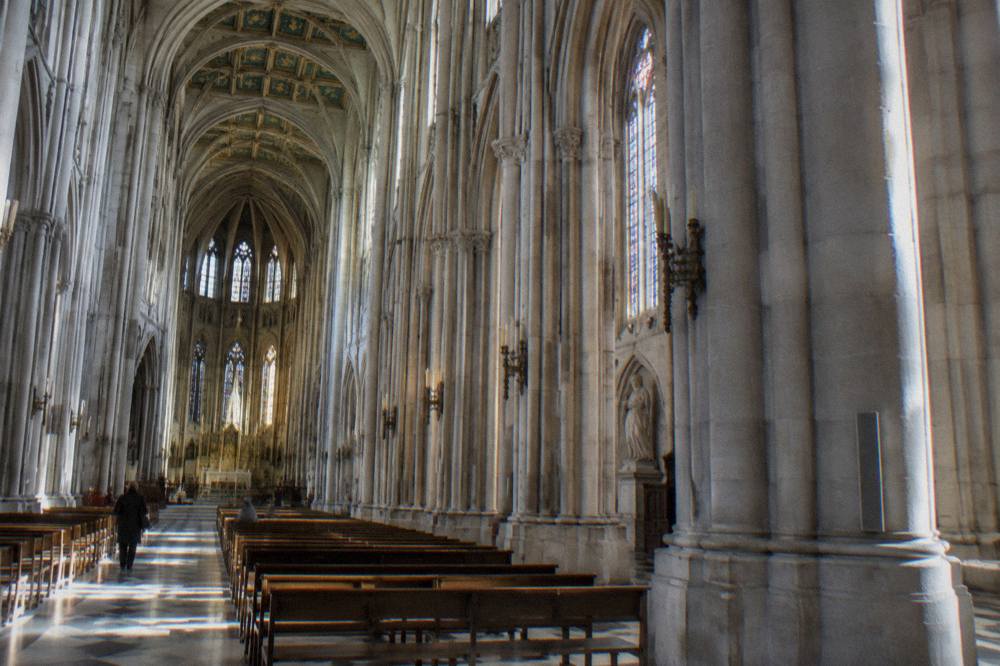
The single biggest timing mistake is arriving mid-afternoon on a Sunday. The nave is functioning as a parish church, mass pushes visitor access aside, and the surrounding Royal Palace crowd makes the whole esplanade slow. A weekday morning gives you the nave almost to yourself, the crypt at its calmest, and the best light on the palace facade across the square.
The official page linked above carries the current mass schedule, and it is the only reliable source for it, because service times shift with the liturgical calendar and with special diocesan events. Checking it the evening before is a two-minute task that saves a wasted trip. As a rule, plan the nave and crypt for the morning, keep the afternoon flexible, and leave the paid museum for whatever window remains after both free sections are done.
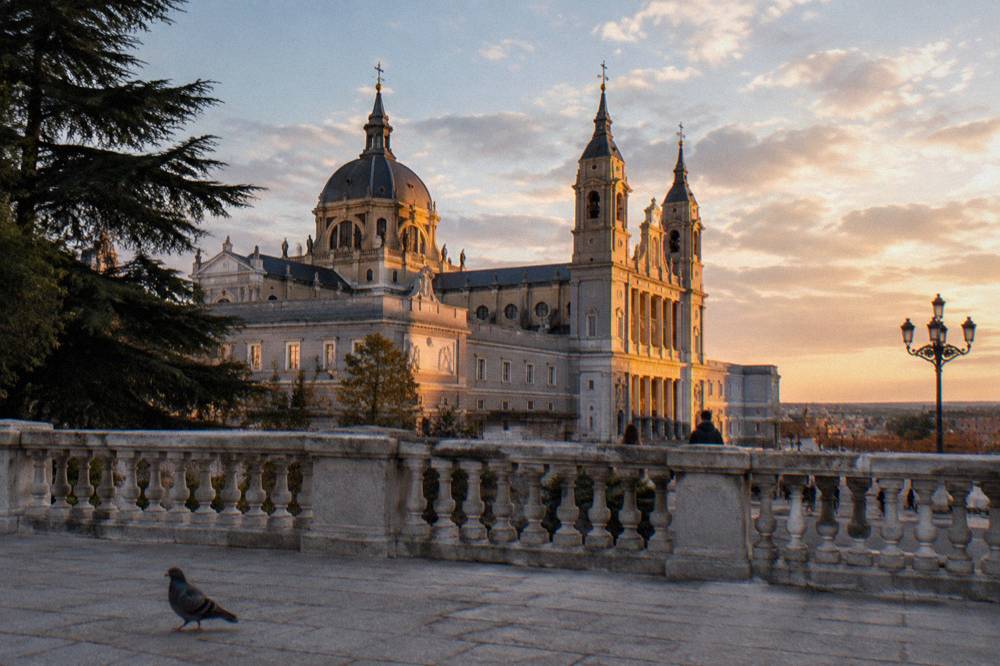
The exterior is free at all hours, of course, and the walkway between the cathedral and the palace is one of the best free photo spots in the city. The Sabatini Gardens on the palace's north side, also free with no conditions, are a short stroll away and give you the classic elevated view of the palace complex with the cathedral dome in frame. Browsing costs nothing, and unlike the palace interior there is no ticket, no window and no queue.
For context, the neighbourhood around the cathedral is the oldest part of Madrid, and a guided walk adds a layer that signage does not. The Old Town Walk, Five Languages on GuruWalk, rated 4.92 out of 5 across 10,008 GuruWalk reviews, is the largest single GuruWalk walk on this site's roster, runs 2 hours 15 minutes in English, Spanish, French, Italian and Portuguese, and meets at Kilometer Zero in the centre of Puerta del Sol.
How Does Almudena Compare With Madrid's Other Free Churches?
Almudena is one of three major free religious sites in central Madrid, alongside the Ermita de San Antonio de la Florida, which holds Goya's frescoes and is free with no conditions, and the city's parish churches, which are generally open without charge. Almudena is the only one of the three with a paid museum attached, which is the main point of comparison.
The Ermita de San Antonio de la Florida is the hidden gem of the set. A small neoclassical chapel on the western edge of the city centre, it carries frescoes painted by Francisco de Goya himself, and Goya is buried there. Entry is free, no donation is requested, and because it sits slightly off the main tourist track it is rarely crowded. If the Almudena queue looks long, a metro ride to the ermita is the better free church visit of the two.
Madrid's monuments repeat Almudena's one-building-two-prices pattern so often that it is worth learning to spot it. The Templo de Debod is the clearest parallel: the park, the exterior and the famous sunset viewpoint are always free, while the temple interior is gated not by money but by a mandatory advance timed reservation. The Palacio de Cibeles works the same way, with the CentroCentro cultural centre and its exhibitions inside free, and the Mirador Madrid rooftop at the top of the same building charging around 4 euros. Same address, different products.
The comparison with the city's museums also matters, because Madrid splits into two free-entry networks that behave differently. The state museums, the Prado, Reina Sofía, the Thyssen and the smaller state-run houses, each have their own specific free window, usually a couple of hours before closing or a weekend afternoon. The municipal museums, the Museo de San Isidro and the Museo de Historia de Madrid, are free year-round with no conditions at all. The cathedral nave sits closer to the municipal pattern, with the museum being the exception.
| Free religious or civic site | Cost | Condition |
|---|---|---|
| Almudena Cathedral nave | Free | Closed to tourists during mass |
| Almudena crypt | Free | Optional 1 euro donation |
| Ermita de San Antonio de la Florida | Free | No conditions, Goya frescoes |
| Museo de San Isidro | Free | Year-round, no conditions |
| Jardines de Sabatini | Free | Always open parkland |
Free status can also change under your feet, which is why a snapshot beats a memory. In the Retiro, the Palacio de Cristal is currently closed for a glass-and-ironwork renovation wrapped in an artistic installation, with reopening targeted around July 2027, while its sister pavilion the Palacio de Velázquez reopened in June 2026 as a free exhibition space. Planning a free day in Madrid means checking the closed list as carefully as the free list.
Can You See The Cathedral On A Free Walking Tour?
Yes. The free walks of the Habsburg old town pass the cathedral on almost every route, because it stands beside the Royal Palace at the top of the Calle Mayor approach. The Original Free Tour on freetour.com, the Royal Palace And Theatre Walk on GuruWalk and the Retiro And Gran Vía Route on GuruWalk all start within a short stroll of the cathedral steps and run on a pay-what-you-want basis.
The Original Free Tour, the freetour.com listing that anchors this site's essential category, runs about 2 hours 30 minutes in English and Spanish and meets at Plaza Mayor in front of the Tourist Information Centre. It is rated 9.3 out of 10 across 21,435 freetour.com reviews, the largest review pool of any walk on either platform in Madrid, and its route threads the Habsburg streets that lead up to the palace and cathedral esplanade.
The Royal Palace And Theatre Walk on GuruWalk is the closest thematic fit for this article: rated 4.89 out of 5 across 1,976 GuruWalk reviews, it runs 2 hours 30 minutes in English, Spanish, French and Italian, and meets at the El Oso y el Madroño statue in Puerta del Sol. The Retiro And Gran Vía Route, rated 4.98 out of 5 across 1,249 GuruWalk reviews in five languages, swings east instead and pairs well as a second walk on another day of the trip.
All of these walks are tips-only, which raises the one question every first-time visitor asks on the spot. For a full answer with figures, see how much to tip a free walking tour, which covers the conventions in English-language and Spanish-language groups alike. The short version: bring cash, decide at the end, and treat the walk as a paid product you price yourself rather than a freebie.
What Should You Know Before Visiting?
Bring small change for the crypt donation, check mass times before a Sunday visit, and treat the museum as a separate decision with its own hours. The cathedral is directly accessible from the Royal Palace esplanade, and the Opera metro stop is the closest station. Photography without flash is generally tolerated in the nave.
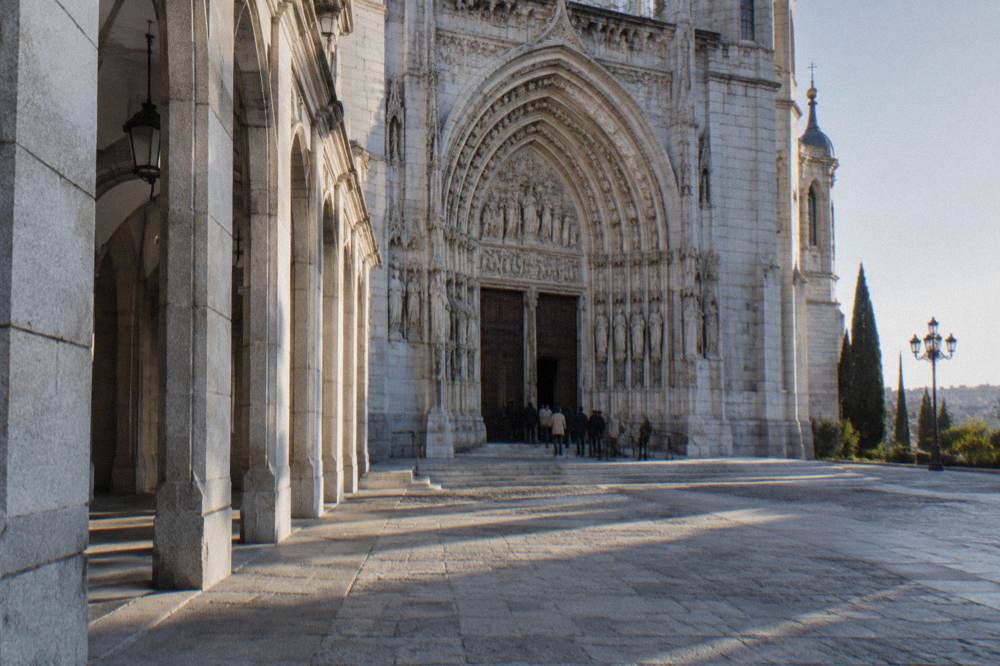
Dress code matters more here than at most Spanish monuments because the nave is an active place of worship. Shoulders covered, no beachwear, and a quieter voice than the plaza outside. The security check at the door is light but real, and large bags may be glanced at. None of this costs money, but it does cost a moment of preparation.
For a wider free-day plan, the cathedral pairs naturally with the Sabatini Gardens, the Campo del Moro park below the palace, and a walk down the Calle Mayor toward Plaza Mayor, all free with no conditions. If you are building a full day, the free one day itinerary on this site's one-day free Madrid itinerary slots the cathedral into a loop that also covers the Puerta del Sol and the San Miguel market, where browsing is free and only the food costs money. The tapas question has its own write-up in the guide to whether Mercado de San Miguel is free.
One planning note on the wider quarter: the state museums' free windows were confirmed stable for 2026, with the Prado keeping its last-two-hours slot and Reina Sofía running evening slots Monday and Wednesday to Saturday plus a midday Sunday window. No major Madrid attraction repriced from free to paid, or paid to free, across 2025 and 2026, which makes the cathedral's long-standing free nave one of the most dependable free entries in the city. For more on the site behind this page, Free Things To Do In Madrid tracks the verified free-entry rules for every major monument in the capital.
If you want the old town context around the cathedral explained rather than just walked, the free tours below are the strongest pairing, and the essentials walks suit visitors who want a shorter route with the same landmarks.
Common Questions About Almudena Cathedral
Is Almudena Cathedral Free To Enter?
Yes. The main nave is free during visitor hours, and the crypt is free with an optional 1 euro donation. The cathedral museum and guided tours are the only paid parts of the complex.
Do you need a ticket for Almudena Cathedral?
No ticket is needed for the nave or the crypt. You simply walk in during opening hours, though the nave closes to tourists during mass times.
Is the crypt of Almudena Cathedral worth visiting?
Yes, and it is free apart from the optional 1 euro donation. It holds the tomb of Madrid's patron saint, the Virgen de la Almudena, and a neo-Romanesque ceiling that contrasts sharply with the modern nave above.
How much does the Almudena Cathedral museum cost?
The museum sells its own tickets with its own opening hours, separate from the free nave. Check the current price on the cathedral's official page before visiting, as museum hours are shorter than the church's.
Can you visit Almudena Cathedral and the Royal Palace on the same day?
Yes, they share an esplanade. Since August 2026 the palace visitor entrance runs through the cathedral esplanade and Plaza de la Armería. The cathedral nave is free, while the palace free window applies only to EU and Latin American residents.
When is Almudena Cathedral closed to visitors?
The nave closes to tourists during mass, most often on Sundays and religious holidays, and hours can shift around services. Midweek mornings are the most reliable window for a quiet visit.