Is Mercado De San Miguel Free To Enter?
Yes, walking into Madrid's famous Mercado de San Miguel costs nothing. Here is what is genuinely free, what you will pay for, and how to enjoy it without spending a euro.
Is Mercado De San Miguel Free To Enter?
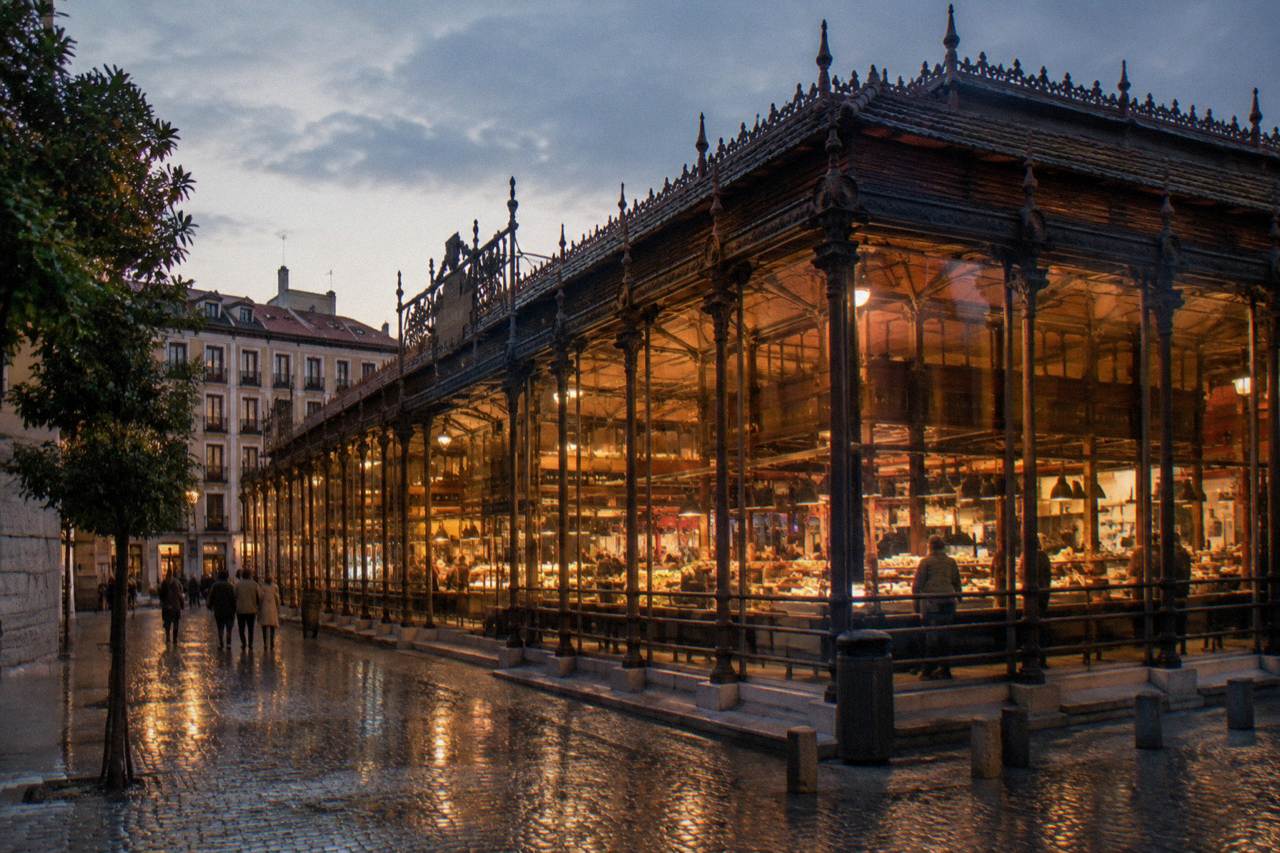
Yes, Mercado de San Miguel is completely free to enter. There is no ticket, no cover charge and no minimum spend at any of the stall counters. The building is a public market hall in the heart of the Austrias quarter, and wandering between its iron columns and glass walls costs exactly nothing. What you pay for is whatever you choose to eat or drink once you are inside.
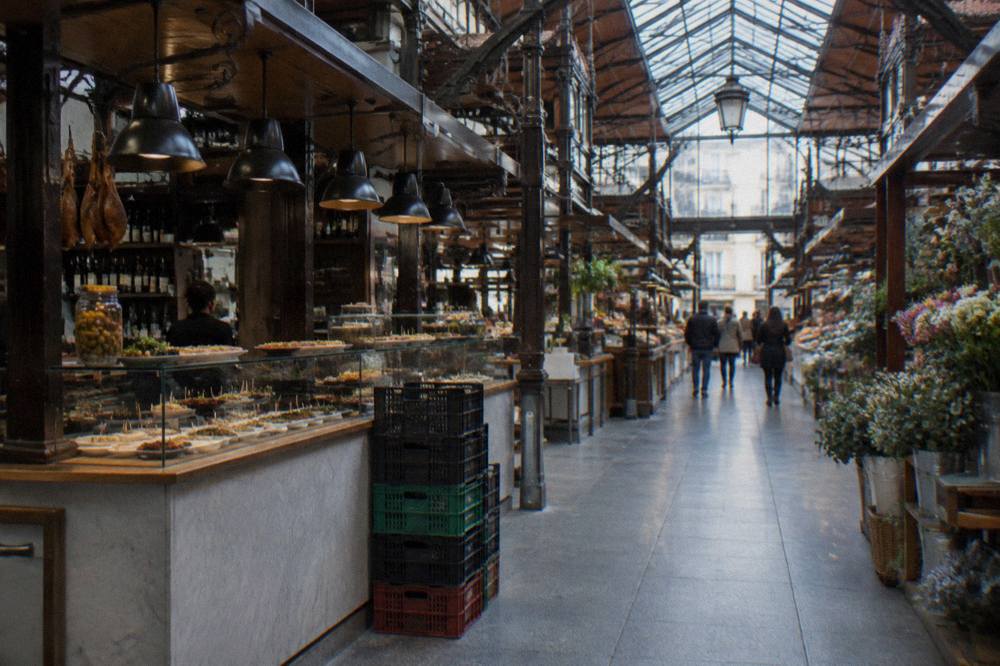
That distinction matters more here than at almost any other Madrid attraction, because San Miguel is one of the rare free sights where the temptation to spend follows you from the moment you step in. The market sits three minutes' walk from Plaza Mayor, inside a restored iron-and-glass structure that is itself worth the visit. Thirty-odd stalls ring the perimeter and fill the central aisles: vermouth taps, oyster bars, jamón carvers, croqueta counters, gin and champagne stands. The architecture is the free part. The croquetas are not.
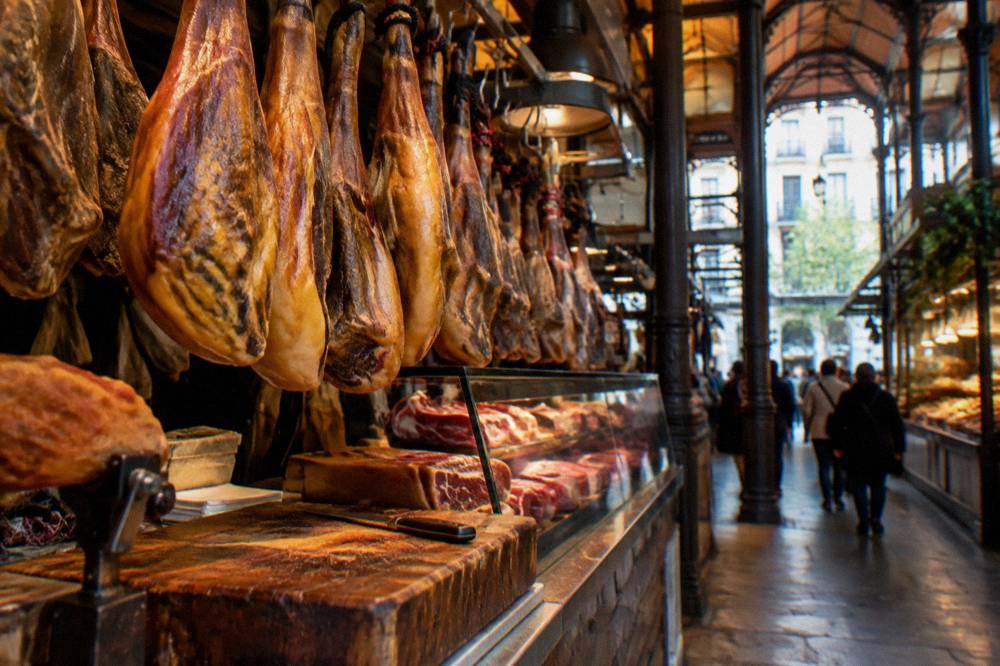
Many visitors arrive expecting a traditional neighbourhood market and find something closer to a gourmet food court, which changes the economics of a visit. A traditional market is a place locals shop; San Miguel is a place travellers graze. Browsing, photographing the glass roof, watching a stallhand shave paper-thin slices of cured ham, all of that is free and genuinely enjoyable. The moment you want a glass of wine with it, you are in a tourist-district price environment, and the bill climbs quickly.
The good news is that the free-entry rule is unconditional. Unlike the state museums, with their last-two-hours free windows and capacity limits, there is no timing trick to learn here. You can walk in at noon on a Saturday, at nine on a Tuesday evening, or during a quiet mid-morning lull, and the door costs the same nothing each time. The market's official information, published through the Madrid city council channels that cover the municipal market network, confirms the same point: entry is open, spending is optional.
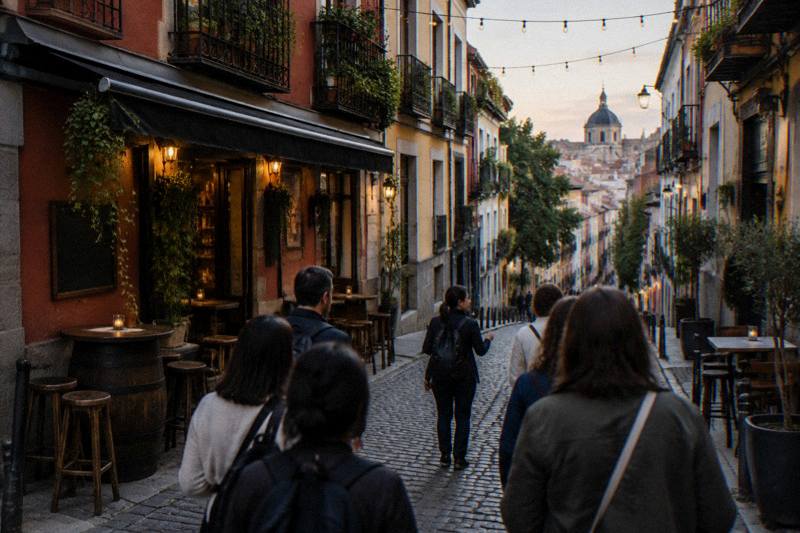
If you want a structured introduction to the neighbourhood the market sits in rather than just the building itself, these free walks all start within a few minutes' walk of its doors:
All three operate on a pay-what-you-want basis, so the tour itself behaves the same way the market does: free to start, and you decide what the experience was worth at the end.
What Is Free Inside The Market, And What Is Not?
Everything except food and drink is free: entry, walking the aisles, the glass architecture, the people-watching and the stall displays. Everything consumable is paid: tapas, drinks, oysters, jamón, seated plates and takeaway boxes. There is no free tasting culture here, and stalls do not hand out samples the way some northern European markets do. Budget for food as you would for a mid-range tapas bar, not a supermarket.
The cleanest way to plan a visit is to separate the two categories in your head before you go. Here is the honest breakdown:
| Category | Free or paid | What to know |
|---|---|---|
| Walking through the doors | Free | No ticket, no queue for entry, no dress code |
| The iron-and-glass architecture | Free | A restored historic structure, best seen from the upper walkway |
| Photographing stalls and the roof | Free | Stalls are used to cameras; be polite at busy counters |
| Watching tapas being prepared | Free | The oyster and jamón counters are theatre in themselves |
| Tapas and pintxos at the counters | Paid | Priced per piece at gourmet-market rates |
| Vermouth, wine and cocktails | Paid | Drinks are a highlight, and priced like a bar, not a shop |
| Seated dining at the few tables | Paid | Same stalls, table service, same tourist-district pricing |
Notice what is absent from the paid column: any entry fee, any mandatory minimum, any pressure to buy. Stallholders are used to browsers, and a party that walks through, photographs the roof and leaves without buying anything is entirely normal. The market makes its money from the visitors who stay, and it does not need to charge the ones who do not.
The one planning note worth adding is about timing rather than money. Mid-evening and weekend afternoons are the crowded periods, when the aisles fill to shoulder-to-shoulder and finding a standing spot at a counter becomes its own small competition. A mid-morning visit gives you the same building, the same stalls and far more room to appreciate the glass roof, which is the part you came in for free anyway.
If you would rather have a guide turn the surrounding streets into the meal itself, the Tapas And Markets Walk on GuruWalk, rated 4.75 out of 5 across 137 reviews, spends two hours and 45 minutes on Madrid's market and tapas culture in English, Spanish and Italian, meeting at Plaza Mayor under the statue of Philip III, a two-minute walk from San Miguel's doors. Like every walk on this site's roster, it is free to join, with the guide paid by whatever participants choose to give at the end. You can also read the site's fuller Mercado de San Miguel visitor guide for a deeper treatment of the market's history and stalls, or See this free tour for the tapas walk's upcoming dates.
How Does San Miguel Compare To Madrid's Other Markets?
San Miguel is the most polished and most expensive of Madrid's market experiences, and the only one designed primarily for visitors. Mercado de San Antón in Chueca is a similar gourmet model with a rooftop bar; Mercado de Vallehermoso and Mercado de la Cebada are locals' markets where the food is cheaper and the architecture plainer. All of them are free to enter, so the choice is about atmosphere and prices, not admission.
The comparison is worth making because "free to enter" is true across the whole municipal market network, and travellers sometimes assume San Miguel's prices are what all Madrid markets charge. They are not. At a neighbourhood market, a small plate and a beer cost what a local would happily pay weekly; at San Miguel, the same idea is priced for a visitor having a one-off experience in a heritage building next to Plaza Mayor. Neither is a scam. They are simply different products.
What San Miguel offers in exchange is density. In one compact glass box you can see an oyster shucker, a vermouth tap, a croqueta fryer and a jamón carver within fifteen steps of each other, which is exactly why the free browse is so satisfying even for visitors who never sit down. What the neighbourhood markets offer is authenticity and value, which is why locals shop there and travellers mostly do not.
The other free "market" experience in Madrid is not a market at all but a street: El Rastro, the Sunday flea market in La Latina, where browsing is the entire activity and buying is genuinely optional in a way San Miguel's counters never quite are. The site's piece on whether El Rastro is free covers it in detail, and the two pair well on a Sunday, since La Latina is a fifteen-minute walk from San Miguel's doors.
What Free Things Surround The Market?
Within a ten-minute walk of Mercado de San Miguel you can reach Plaza Mayor, Puerta del Sol, the Royal Palace exteriors, the Jardines de Sabatini, Campo del Moro, Catedral de la Almudena's nave and crypt, and the whole Austrias street network, every one of them free. The market sits at the centre of the densest cluster of no-cost sights in Madrid, which makes it an ideal free-walk anchor rather than a destination in itself.
This is the real answer for a budget visitor. San Miguel's free entry is nice, but its location is the actual gift. Step out of the market's western door and you are in Plaza de la Villa, a small medieval square that most visitors walk past without knowing it is one of the oldest civic spaces in the city. Five minutes further and the Royal Palace's exterior walls rise above the gardens, free to admire at any hour. The Jardines de Sabatini, formally laid out beside the palace, cost nothing and are at their best in the late afternoon. Campo del Moro, the palace's parkland sloping toward the river, is likewise free and far quieter than Retiro. The full index of guides sits on Free Things To Do In Madrid.
The Catedral de la Almudena next to the palace is free to enter for both the nave and the crypt, with an optional one-euro donation in the crypt and no mandatory ticket, per the cathedral's own visitor information at catedraldelaalmudena.es. Its museum and guided tours are separately paid, a distinction this site keeps strict: same building, two different facts.
The Austrias streets between the market and the palace are the oldest in Madrid, and this is where a free walking tour earns its keep, because the stories are not visible on the walls. The Original Free Tour on freetour.com, rated 9.3 out of 10 across 21,435 reviews, covers Plaza Mayor and the surrounding quarter in English and Spanish over two and a half hours, meeting at Plaza Mayor in front of the Tourist Information Centre. It is the single most-reviewed walk on this site's entire roster, though its figures sit on freetour.com's ten-point scale, so they are never converted to a five-star equivalent here. For readers weighing platforms, the site's comparison of Civitatis or GuruWalk explains how the two pay-what-you-want ecosystems differ.
For context on what else the neighbourhood offers at no cost, the site's broader roundup of free things to see in Madrid includes several Austrias stops, and the one-day free itinerary threads San Miguel into a full walking day.
When Is The Best Time To Visit For A Free Browse?
Go mid-morning on a weekday for the emptiest, most enjoyable free visit. The market is at its most crowded from early evening through midnight, especially Thursday to Saturday, when the aisles become a standing cocktail party. Weekend afternoons draw tour groups and families. If your goal is the architecture rather than the atmosphere, arrive when the doors open and you will have the glass roof almost to yourself.
The crowd pattern is predictable enough to plan around. San Miguel functions as an evening venue: Madrileños and visitors alike treat it as a tapas-and-vermouth stop before dinner, so the energy builds from around seven in the evening and peaks late. That late slot is genuinely fun, and if atmosphere is what you came for, it is worth the squeeze. But it is the worst possible time to appreciate the building itself, because in a packed aisle you see the back of the crowd, not the roof.
The free-entry rule also makes the market a perfect bad-weather stop, and this is an underrated use. When rain hits the Austrias quarter, San Miguel is the one outdoor-feeling space that stays dry, and ducking in costs nothing. A wet Tuesday afternoon in Madrid could do worse than twenty minutes under the glass roof with a coffee, or with nothing at all.
One seasonal note for readers visiting in October: the annual heritage open-days festival, Madrid Otra Mirada, opens registration in late September and offers free access to 205 patrimonial sites across the city for one week in mid-October, many of them buildings that are never otherwise open to the public. It is worth checking against your dates, because several participating buildings sit within walking distance of the market.
Is The Market Worth Visiting If You Spend Nothing?
Yes, unambiguously. Even with a zero-euro budget, Mercado de San Miguel delivers a restored iron-and-glass landmark, a dense display of Spanish food culture, and a free warm dry space in the middle of Madrid's most historic quarter. Visitors who spend nothing get the architecture, the atmosphere and the spectacle. Visitors who spend get lunch. Only a visitor expecting a cheap meal leaves disappointed, and that expectation is the one thing worth correcting before you go.
The honest framing is this: San Miguel is a free attraction with an optional restaurant inside it, not a restaurant with an entry fee. Judge it as the former and it is one of the best no-cost stops in central Madrid, a building you can absorb in fifteen unhurried minutes and that sits directly on the route between Puerta del Sol and the Royal Palace anyway. Judge it as the latter and you will find gourmet pricing in a tourist hotspot, which is neither a secret nor a scandal, just a fact of what the market became after its full restoration transformed it from a traditional market into a gourmet hall.
For a budget visit, the sequence works well: browse the market free, walk the Austrias streets to the palace exteriors and gardens, then eat somewhere cheaper in La Latina or Lavapiés, where the same style of tapas costs neighbourhood prices. That is the pattern this site's Madrid on a budget guide recommends, and it turns San Miguel into the free spectacle of the day rather than the expensive lunch.
If you want the walk as well as the meal, these three pay-what-you-want tours all cover the market's neighbourhood and can be booked for your dates:
Common Questions About Mercado De San Miguel
Is Mercado De San Miguel Free To Enter?
Yes. Entry is completely free with no ticket, no cover charge and no minimum spend. You only pay for food and drinks you choose to buy at the stalls, and browsing without buying is normal and welcome.
Do you have to buy anything at Mercado de San Miguel?
No. Plenty of visitors walk through, photograph the glass roof and stall displays, and leave without spending anything. Stallholders are accustomed to browsers, and there is no tasting obligation or purchase pressure.
Is Mercado de San Miguel a tourist trap?
It is a genuine heritage building with gourmet tourist-district prices, which is not the same thing as a trap. Entry is free, the iron-and-glass architecture is real, and the food quality is high. What it is not is a cheap locals' market, so treat it as a free spectacle with optional expensive snacking.
When is Mercado de San Miguel least crowded?
Mid-morning on weekdays is the quietest period, when the aisles are passable and the glass roof is actually visible. Evenings from around seven onward, especially Thursday to Saturday, are the busiest, when the market becomes a standing tapas party.
What free attractions are near Mercado de San Miguel?
Plaza Mayor, Puerta del Sol, the Royal Palace exteriors, the Jardines de Sabatini, Campo del Moro, and the nave and crypt of Catedral de la Almudena are all within a ten-minute walk, and all free. The market sits at the centre of Madrid's densest cluster of no-cost sights.
Can you visit Mercado de San Miguel on a zero-euro budget?
Yes, and it is a genuinely good free visit: a restored landmark building, a dense display of Spanish food culture, and a warm dry stop in the historic quarter. Eat before or after in La Latina or Lavapiés if you want the same tapas at neighbourhood prices.