Is Madrid Worth Visiting?
An honest yes-with-caveats answer to whether Madrid is worth visiting, anchored in what the city gives away for free: museums with free windows, parks, squares and pay-what-you-want walking tours.
Is Madrid Worth Visiting?
Yes, Madrid is worth visiting, with one honest caveat: it rewards planning. The headline sights are genuinely strong, but the city's real edge is its free layer, free-hour museum windows, unconditional municipal museums, parks with no gate at all, and pay-what-you-want walking tours rated across tens of thousands of reviews. A visitor who uses that layer well spends far less than the city's reputation suggests.
That caveat matters because Madrid is not a city that performs on arrival the way some rivals do. There is no single monument that resolves the trip the way the Eiffel Tower or the Colosseum does. What Madrid has instead is density: a walkable historic core, a state museum network with reliable free windows, and a scale of free cultural programming, from the Retiro's exhibition pavilions to the citywide Veranos de la Villa festival, that most European capitals simply do not match.
The honest framing also means resisting the tapas-and-nightlife cliche. Those things are real and good. But they are the surface. The stronger argument for Madrid is that a first-time visitor with a modest budget can spend a free evening hour inside the Prado, walk a former royal estate turned public park, and join a local guide through the Austrias old town, all in one day, with the most expensive item being lunch.
This article makes the case properly, including the parts where Madrid underdelivers, and points to the specific free tools that make the trip work.
What Does Madrid Actually Do Better Than Other Capitals?
Three things, and they compound. First, a free museum layer that is unusually deep: the state museums each run their own free-entry windows, and the municipal museums are free year-round with no conditions. Second, parks treated as genuine cultural venues, not just green space. Third, a pay-what-you-want walking tour scene whose scale, tens of thousands of reviews per listing, is unmatched in most of Europe.
Start with the museums, because this is where Madrid quietly beats its weight. The Prado opens its collection free for the last two hours every day it operates, Monday to Saturday from 18:00 to 20:00 and Sundays from 17:00 to 19:00, capacity-limited with a walk-up ticket. The Reina Sofía runs a similar evening window, roughly 19:00 to 21:00 Monday and Wednesday to Saturday, closed Tuesdays, with a Sunday midday slot instead; the museum publishes the full free-day dates on its own ticketing site. These are not obscure loopholes; they are standing policy, confirmed stable through 2026.
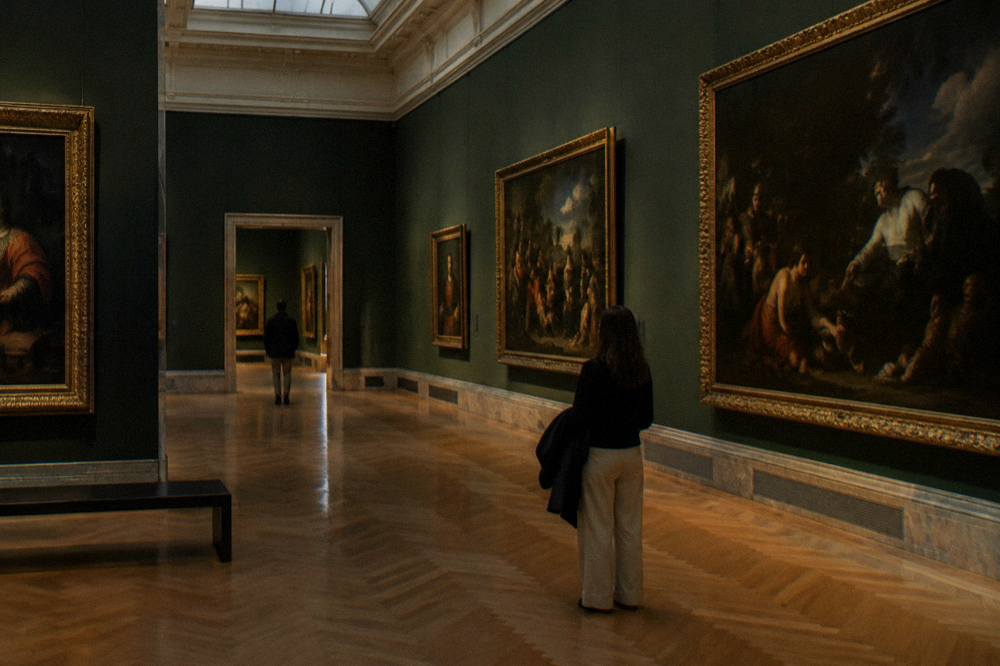
Then there is the layer most guides blur: the municipal museums work on the opposite rule. The Museo de San Isidro and the Museo de Historia de Madrid are free general admission year-round, no window, no booking, no conditions. A visitor who treats the two networks as one "check the free hours" system will waste effort on museums that need no checking at all. The split is explained properly in the guide to the best free and budget museums in Madrid.
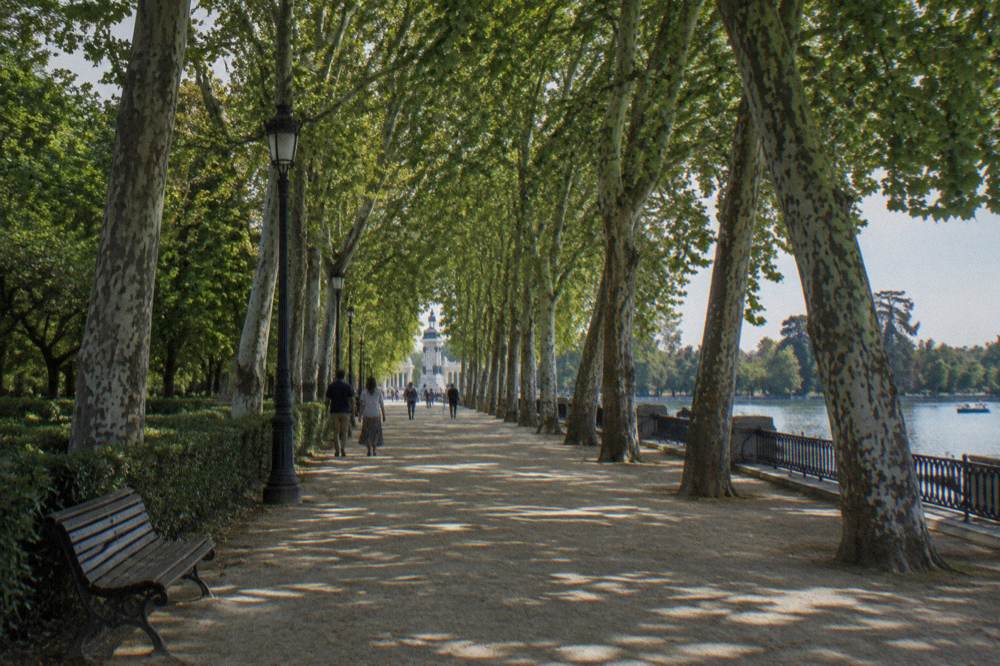
The parks argument is equally concrete. Retiro is not a patch of grass; it is a former royal estate holding free exhibition pavilions, a rose garden and a lake, and it is the subject of its own Retiro Park guide. Madrid Río turned a buried river road into a continuous free linear park. Casa de Campo is vast and costs nothing to enter, though its cable car and zoo are separately ticketed, a distinction the Casa de Campo guide covers in full.
Is Madrid worth it compared with Barcelona or Seville? For a visitor whose priority is paintings, parks and walkable density, yes, and by a margin. For a visitor chasing a single iconic skyline, Madrid will underwhelm, and honesty requires saying so.
Is Madrid Expensive To Visit?
No, relative to Western Europe's other major capitals, and the gap is wider than most budgets assume. Lodging and meals cost meaningfully less than in Paris, London or Amsterdam, and the free layer removes several line items entirely: museums on their free windows, every major park, and walking tours priced at whatever the visitor chooses to tip. The expense risk is concentrated in a few specific traps, not spread across the trip.
The structural point is that Madrid's most expensive attractions all have a free door somewhere. The Prado's free window. The Royal Palace's free entry window for EU and Latin American residents, collected in the Royal Palace free entry guide. The Thyssen's free Monday afternoons for the permanent collection. A visitor who plans around these doors pays museum prices only when convenience is worth more than the money.
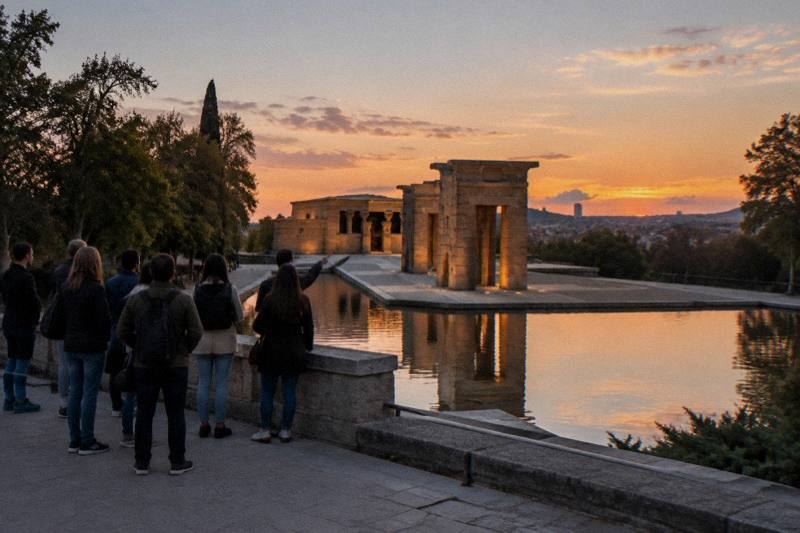
The traps are real, though. The Templo de Debod's famous sunset viewpoint is free, but the temple interior requires an advance timed reservation, a booking constraint rather than a price one. The CentroCentro cultural centre inside Palacio de Cibeles is free while the Mirador Madrid rooftop in the same building charges around EUR 4. CaixaForum charges EUR 6 general entry and offers free days only on four fixed annual dates, May 15, May 18, November 9 and for eligible groups, per its own centre information. These are the places where a visitor expecting "free Madrid" gets caught.
A realistic daily budget for a mid-range visitor, using the free layer deliberately, looks something like this:
| Line item | Free route | Paid route |
|---|---|---|
| Old town orientation | Pay-what-you-want walking tour | Private guided tour, EUR 20-40 |
| Prado | Free last two hours, queue | Timed ticket, full price |
| Royal Palace | Free window for EU/Latin American residents | Standard ticket |
| Main meal | Menu del día, EUR 12-16 | Tourist-centre terrace, EUR 25+ |
| Park afternoon | Retiro, free, all of it | Rowing boat rental, small fee |
The deeper answer to the expense question is the article is Madrid expensive to visit, which runs the numbers; the short version is that Madrid is a city where the discount is available but rarely advertised.
Which Madrid Museums Can You See For Free Besides The Prado And Reina Sofía?
Beyond the Prado and Reina Sofía windows already described, the Thyssen opens its permanent collection free on Monday afternoons, and the Romanticismo, Cerralbo, Archaeological National and Traje museums go free from Saturday afternoon through Sunday. The Cerralbo adds a Thursday evening slot. The naval museum, the national library's exhibition space and the two municipal museums are free outright, with no window to catch.
The Thyssen detail deserves its own sentence because it trips people up twice. The Monday slot, 12:00 to 16:00, covers the permanent collection only. A separate Saturday slot, 21:00 to 23:00, covers temporary exhibitions only, a genuinely different fact: a visitor who shows up Saturday evening expecting the collection will be let into the shows instead. For a first visit the Monday afternoon is the one that matters, and it slots neatly into a day when the state museums charge full price.
The smaller state museums share a rhythm. The Romanticismo, the Cerralbo and the Archaeological National museum are all free from Saturday 14:00 and all day Sunday, plus four fixed bonus dates a year, 18 April, 18 May, 12 October and 6 December. The Cerralbo adds Thursday 17:00 to 20:00, the widest window in that group. The Museo del Traje follows the Saturday-and-Sunday pattern and throws in standing free entry for under-18s and over-65s. Because the bonus dates cluster around public holidays, a trip timed to one of them can unlock three or four museums in a single day.
Then there is the unconditional list, which needs no planning at all: the Museo Naval de Madrid, the Biblioteca Nacional's exhibition space, and the Ermita de San Antonio de la Florida, a small chapel holding Goya's ceiling frescoes, free to walk into. One caution belongs here too. The Real Academia de Bellas Artes de San Fernando is commonly reported as free on Wednesdays, but that schedule was not re-confirmed against the Academy's own current page in the latest verification pass, so treat it as unverified rather than building a day around it.
| Museum | Free window | Catch |
|---|---|---|
| Thyssen-Bornemisza | Monday 12:00-16:00 | Permanent collection only |
| Thyssen-Bornemisza | Saturday 21:00-23:00 | Temporary exhibitions only |
| Museo del Romanticismo | Saturday from 14:00, all day Sunday | Plus four fixed bonus dates a year |
| Museo Cerralbo | Thursday 17:00-20:00, Saturday from 14:00, Sunday | The widest window of the group |
| Museo Arqueológico Nacional | Saturday from 14:00, all day Sunday | Same bonus dates as the Romanticismo |
| Museo del Traje | Saturday from 14:00, Sunday | Under-18s and over-65s free always |
| Museo Naval de Madrid | Free general admission | None |
| Biblioteca Nacional exhibition space | Free general admission | None |
| Ermita de San Antonio de la Florida | Free entry | Small space, Goya frescoes |
How Do You See Madrid Properly If It Is Your First Visit?
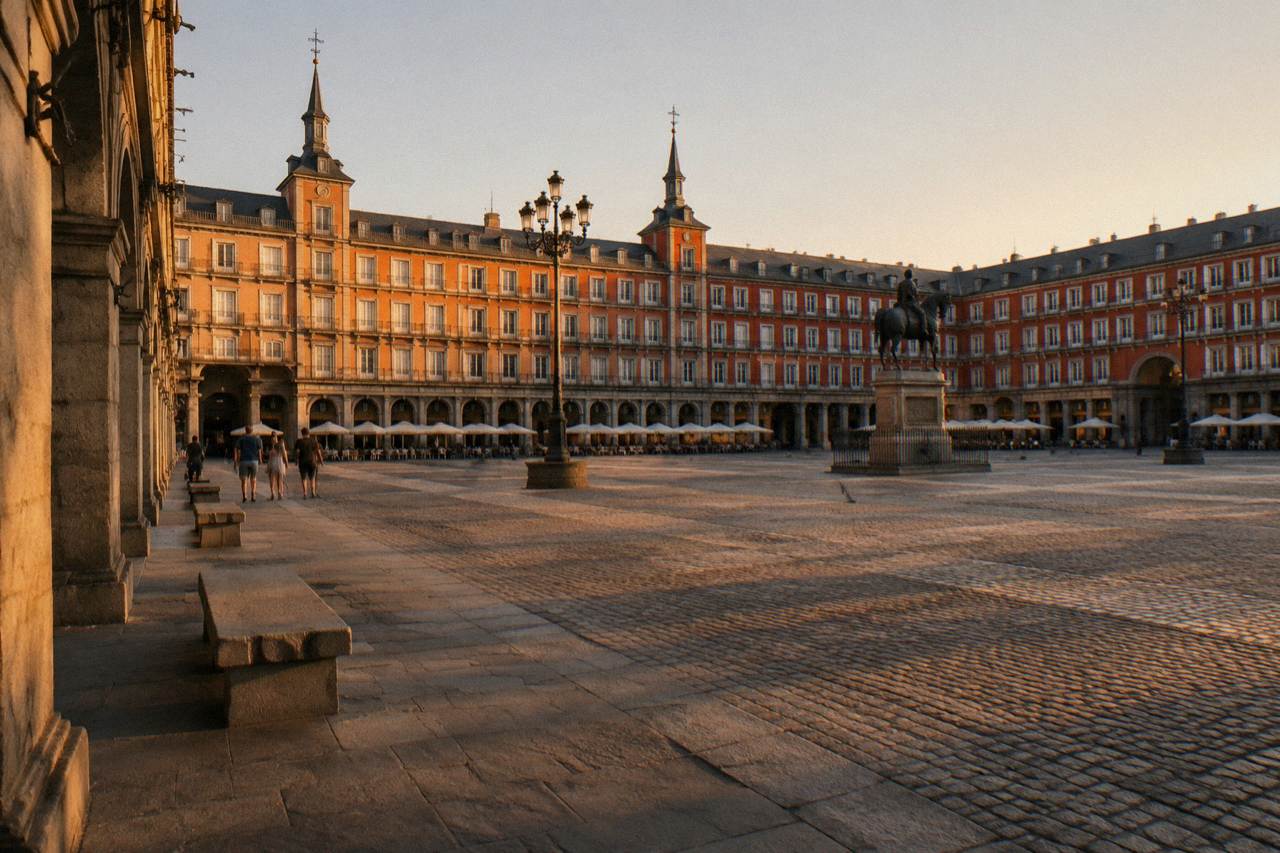
Walk it, and start with a guide. The historic core, Puerta del Sol, Plaza Mayor, the old streets of the Austrias neighbourhood, is compact enough to cover on foot in a morning, and a pay-what-you-want tour turns that walk into context instead of scenery. After that, the free layer does the rest: one museum free window per day, one park, one neighbourhood, and the city starts making sense.
The Original Free Tour of Madrid is the natural first move. It runs on freetour.com, rated 9.3 out of 10 across 21,435 reviews, meeting at Plaza Mayor in front of the Tourist Information Centre, covering the historic centre in two and a half hours in English and Spanish. Two and a half hours is enough to leave a first-time visitor oriented rather than exhausted, and the freetour.com model means the price is whatever the walk was worth to you, a policy the tipping guide covers in detail.
For a second angle, the Old Town Walk, Five Languages on GuruWalk is the largest single GuruWalk walk in the city, rated 4.92 out of 5 across 10,008 reviews, meeting at Kilometer Zero in the centre of Puerta del Sol by the Tio Pepe sign. It runs two hours and fifteen minutes and, unusually, operates in English, Spanish, French, Italian and Portuguese. Its review pool is the deepest on GuruWalk's Madrid roster, which matters for a visitor choosing a walk before reading a single review themselves.
Beyond the walks, the honest first-visit shape is one anchor per day. The Prado on its free window, then Retiro, which is a short walk away. The Royal Palace and Almudena Cathedral, whose nave and crypt are free to enter with an optional EUR 1 donation for the crypt, per the cathedral's own page. The Rastro flea market on a Sunday morning, browsing free. The free one day Madrid itinerary sequences this properly if the trip is short.
For the palace day, the Royal Palace And Theatre Walk on GuruWalk, rated 4.89 out of 5 across 1,976 reviews, meets at El Oso y el Madroño in Puerta del Sol and runs two hours 30 minutes in English, Spanish, French and Italian. It pairs naturally with the resident free window described above. One currency note: the palace roof renovation is in its final phase, and since August 2026 visitors enter from the Almudena Cathedral esplanade side, Plaza de la Armería, while that work finishes.
For the park day, the Retiro And Gran Vía Route on GuruWalk, rated 4.98 out of 5 across 1,249 reviews, is the highest-rated walk on the featured roster. It meets at Puerta del Sol by the horse statue, runs two hours 30 minutes in five languages, and its title names its two anchors, Gran Vía and the Retiro, which is exactly the ground a first timer wants covered.
One warning worth stating plainly: do not build the trip around the Sorolla museum. It has been closed since October 2024, and only its new extension opens on 15 October 2026; the house and studio stay shut for months more. Every visitor who plans around it as a stop loses an afternoon.
Are Madrid's Free Walking Tours Actually Good?
The review pools say yes, and they are unusually deep for a pay-what-you-want format. The themed walks in particular hold their ratings at scale: the ghost walk sits at 4.9 out of 5 across 786 GuruWalk reviews, the civil war walk at 4.89 out of 5 across 616, and the dusk walk at 4.97 out of 5 across 553. Those are smaller pools than the essentials walks, but strong ones for specialist history tours.
The scene's depth is itself part of the worth-it answer. The roster behind this directory counts 21 walks with a page, 18 on GuruWalk and 3 on freetour.com, carrying more than 30,000 reviews between them. That scale means themed history walks exist at all, in English, with pools big enough to judge them by, which is not true of most cities this size.
The themed three are worth knowing by name. The Dark Side And Terror Walk on GuruWalk, two hours 15 minutes in English and Spanish, meets at Plaza Mayor near the statue of Philip III and takes the city's ghosts, crimes and legends as its material. The Civil War, Guernica And Franco walk, also on GuruWalk, runs two hours 30 minutes in English and Spanish from Plaza del Callao 19, in front of Rodilla, and does the political history most visitors arrive knowing nothing about. Medieval At Dusk, Temple Of Debod, two hours 30 minutes in English only from Plaza Mayor next to the Hotel Pestana Collection, is the highest-rated of the three at 4.97 out of 5, and its title pairs the medieval city with the Templo de Debod.
Mechanically, none of this costs anything to reserve. GuruWalk walks book through each guide's own GuruWalk page, the freetour.com walks through their freetour.com listing, and payment happens at the end, at the amount the walker decides, under the tipping norms covered above. For a visitor still weighing whether the format is trustworthy, that question has its own treatment, and the short answer is that the review pools are real, public and large enough to read before committing.
When Is Madrid Worth It Most, And When Is It Not?
Madrid is worth it most in spring and autumn, when the parks are at their best and the outdoor life the city runs on actually functions. It is worth it least in August, when much of the city's social infrastructure goes on holiday, and for visitors chasing a beach or a single monument. And it rewards a second visit more than the first, because the free layer keeps deepening once the core is done.
The seasonal point is practical. Veranos de la Villa, the city's summer festival, ran its 42nd edition from 7 July to 29 August 2026 across 14 districts, with dozens of free activities, so August is not empty; but the standard advice holds, many smaller venues and neighbourhood restaurants close for the month. Spring and autumn carry the better version of the city.
The "not worth it" cases deserve honesty too. If the trip is a two-day city break built around one must-see, Madrid is the wrong choice; its value is cumulative. If the budget assumes every museum at full price every day, the trip costs what Paris costs, and the visitor has simply failed to use the free windows. And if the interest is Moorish architecture or a coastal scene, Seville or Barcelona serve that better.
For the visitor who does return, the second layer is where Madrid quietly wins: the municipal museums, the Malasaña free things guide, the Madrid Otra Mirada heritage open days, the ghost and civil war walks that a first-timer never reaches. That compounding is the working premise of Free Things To Do In Madrid: the city's free layer is not a budget compromise but the actual argument for going.
Common Questions About Madrid
Is Madrid Worth Visiting?
Yes, with the caveat that it rewards planning. Madrid's strengths are density and a deep free layer: free-window state museums, free municipal museums, unconditional parks and pay-what-you-want walking tours. A visitor who uses that layer spends far less than the city's reputation suggests.
How many days does Madrid need?
Three full days covers the historic core, one major museum per day on its free window, and Retiro. A fourth day opens up the Rastro, the municipal museums and the neighbourhoods. Two days works but forces hard cuts.
Is Madrid cheaper than Barcelona?
Generally yes, on lodging and meals, and the gap widens if the free museum windows are used. Barcelona's headline attraction is paid and timed; Madrid's core can be seen substantially for free.
What is the best free thing to do in Madrid?
Walking the Austrias old town with a pay-what-you-want guide, then the Prado's free last two hours. Both are standing, daily options, not one-off events.
Is Madrid good for a first solo trip?
Yes. The centre is walkable, the metro is simple, and pay-what-you-want tours make structured social contact easy without pre-booking expensive activities.
Does Madrid have enough to see for a week?
Yes, especially with day trips. The city itself holds five or six days comfortably, and the free layer, parks, museums, neighbourhoods, stretches that further without adding cost.