Is Reina Sofia Free?
Yes, conditionally: Reina Sofía is free every evening except Tuesday and on Sunday midday, plus five full free days a year. Here are the exact slots, the queue reality and what the free ticket actually covers.
Yes, conditionally. The Museo Reina Sofía is free for two hours before closing on every day it is open except Tuesdays, when it is closed entirely, and for a midday window on Sundays and public holidays. The free ticket covers the collection, including Guernica, and it is individuals only, capacity-limited, with a walk-up ticket collected at the museum. Five fixed dates a year are fully free.
That is the short version, and it is more generous than most visitors expect. Spain's national museum of modern art, the one that holds Picasso's Guernica in a permanent, sober room of its own, does not hide its free access behind a lottery or a residents-only rule. The catch is purely logistical: the free window is short, the queue is real, and the schedule shifts by day of the week, so turning up at the wrong hour means paying full price or missing out entirely.
This article lays out the exact current slots, the annual fully free days, what the free ticket does and does not include, and how the museum's two satellite pavilions in the Retiro park fit into a free day in Madrid. The full planning detail, including how to combine the museum with other free sights in the Lavapiés and Atocha neighbourhood, lives in the dedicated Reina Sofia free entry guide.
Is Reina Sofia Free?
Yes, but only during specific windows, so timing matters if you want to visit the Reina Sofia for free. Outside those designated hours, standard admission applies and you will need a paid ticket. Check the museum's current schedule before your visit, since the free-entry windows are limited and can affect how you plan your day in Madrid. The museum gives free access Monday and Wednesday through Saturday from 19:00 to 21:00, and on Sundays and public holidays from 12:30 to 14:30. It is closed on Tuesdays. The free ticket covers the collection, including the Guernica room, and it is for individual visitors only, subject to capacity, with a ticket collected on site rather than booked ahead. Five fixed dates a year round it out.
The evening slot is the one most people use. Two hours is genuinely enough to see the highlight route: the second and third floors of the Sabatini building, where Dalí, Miró and Picasso lead up to the Guernica room, and the collection's thread from its earliest rooms to the contemporary wings. The museum's own visitor pages describe the layout and the current programme at museoreinasofia.es, which is the source to check for any special closure before you plan an evening around it.
Two things regularly trip people up. The first is Tuesday: the museum is simply shut, so the free window does not exist that day, and a surprising number of itineraries published online still send readers there. The second is the ticket itself. The free slot is not an open door, you join a line at the ticket desk, get a free admission ticket, and go through security. On a busy Thursday or Friday evening in high season that line can take twenty to forty minutes of the two-hour window, which is why locals arrive closer to 19:00 than to 20:30.
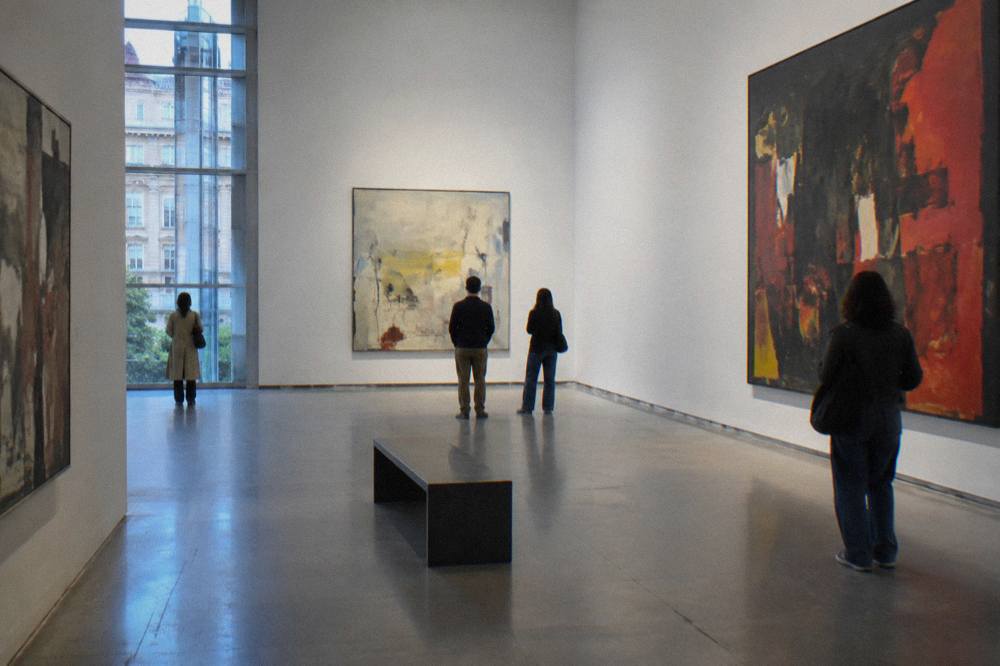
It is also worth being honest about what the free window feels like. It is busy, it moves fast, and the rooms around Guernica are the most crowded in the building at any price. If you want the museum at a whisper, the paid morning hours are the better product. If you want Picasso's war painting without paying anything, the evening slot delivers exactly that, every day the museum is open.
The same logic applies to the city around it. Atocha station, the Lavapiés streets and the CaixaForum cultural centre sit within ten minutes' walk, and the museum's free evening slot slots neatly after a day of old-town wandering. The Original Free Tour, a freetour.com listing rated 9.3 out of 10 across 21,435 reviews, starts at Plaza Mayor and covers the Habsburg core in two hours 30 minutes, which finishes with time to walk down Calle Atocha toward the museum for a 19:00 entry. That is the single most efficient free day in the city.
What Are The Exact Free Hours At Reina Sofia?
Monday and Wednesday to Saturday, the free window runs 19:00 to 21:00; on Sundays and public holidays it moves to 12:30 to 14:30; and the museum is closed on Tuesdays. Those are the standing free windows for the collection. In addition, the museum is fully free, all day, on 18 April, 18 May, 22 May, 12 October and 6 December. Free entry is for individuals only, capacity-limited, and the ticket is collected on site.
The evening and Sunday windows are the workhorses. The schedule has been confirmed stable across recent seasons, and the dedicated ticketing information site lays out the current free-entry terms at entradasreinasofia.es, which is worth a glance before a visit because special exhibition days occasionally shift the ordinary pattern.
| Day | Free window | Notes |
|---|---|---|
| Monday | 19:00–21:00 | Collection, individuals only |
| Tuesday | Closed | No free slot exists |
| Wednesday to Saturday | 19:00–21:00 | Queue builds from 18:45 |
| Sunday and public holidays | 12:30–14:30 | Midday slot, busiest of the week |
| 18 April, 18 May, 22 May, 12 October, 6 December | All day | Full free days, museum-wide |
A note on the Sunday slot, because it is the one people most often miss. It is a lunchtime window, not an evening one, and it collides with the Spanish lunch schedule in a way that actually works in your favour: the streets empty, the museum fills, and you are out by 14:30 with the whole afternoon ahead of you. The trade-off is that Sunday midday draws the biggest free queue of the week, especially on rainy days. Arrive by 12:00 if you want to be inside in the first fifteen minutes.
The full free days deserve a sentence of explanation. They are not random promotions, they are fixed national and municipal dates: International Museum Day in May, the Feast of the Almudena, Hispanic Day and Constitution Day. Because they are fixed, they are the easiest free entries in Madrid to plan a whole trip around. The 18 April and 18 May dates in particular tend to have the lightest crowds of the five, falling outside the summer peak.
If you are weighing the free evening against the paid morning, the deciding factor should be what else your day holds. The museum sits at the bottom of the Paseo del Prado art axis, and the Prado runs its own free window, the last two hours of every opening day, which is covered in detail in is the Prado museum free. The two free windows do not overlap: the Prado's evening slot starts at 18:00 Monday to Saturday, Reina Sofía's at 19:00, so a determined visitor can do the last hour of the Prado and then walk ten minutes down the Paseo for the full Reina Sofía window. It is a demanding evening, but it is the closest thing Madrid has to a two-masterpiece free night.
Is The Guernica Included In Free Entry?
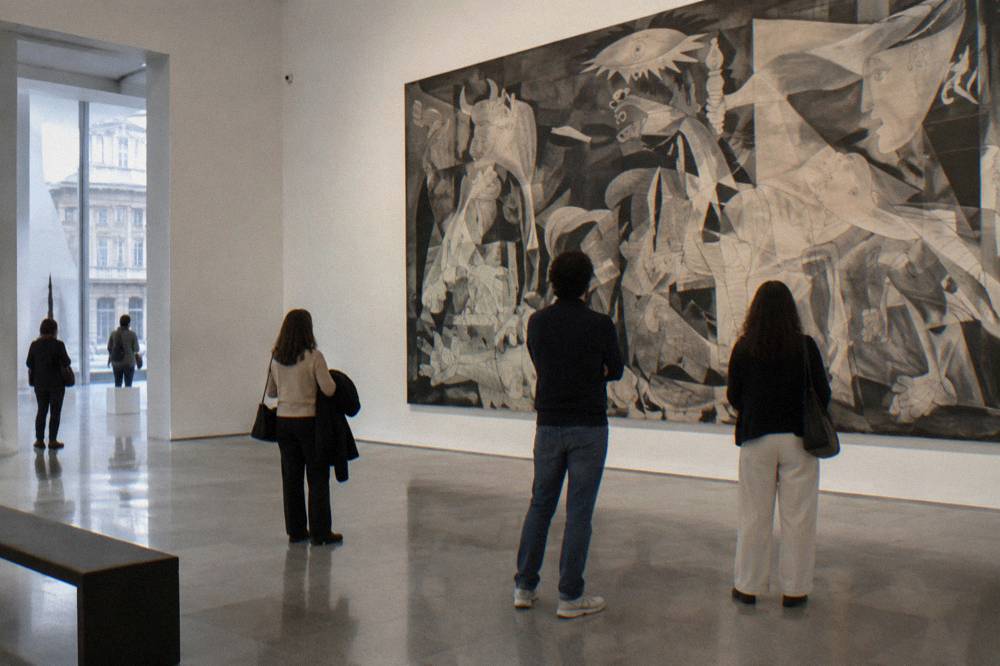
Yes, the Guernica is included. The free ticket covers the entire collection, including the Guernica room, the Dalí and Miró floors and the temporary exhibitions that are not separately ticketed. There is no separate free route or reduced free circuit; free visitors walk the same rooms as paying ones. The only things the free window does not solve are time and crowds, since the two-hour slot compresses a museum that deserves three or four.
The Guernica room is the reason most free visitors come, and it rewards a little preparation. The painting hangs at the end of a sequence that builds through Picasso's preliminary studies, so the rooms before it are not filler, they are the argument. In two hours you can comfortably do the Sabatini building's second and third floors, which is where that sequence lives, and still have twenty minutes for the Nouvel building's contemporary collection if you move briskly.
Photography is permitted in most rooms, but the Guernica room itself has its own rules and staff enforce them firmly. The museum also runs its collection across two buildings connected on the upper floors, and the free ticket covers both. If your window is running short, the Sabatini side is the one to prioritise.
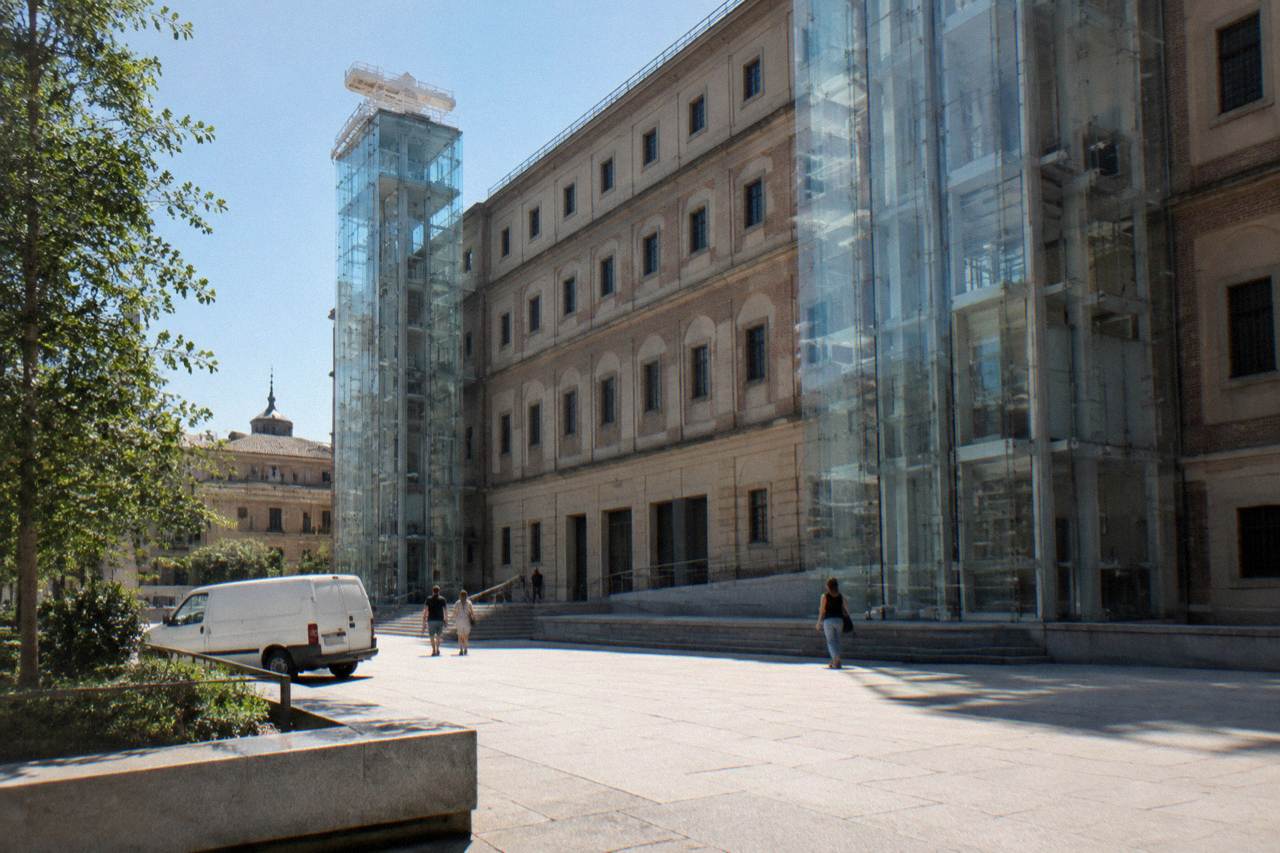
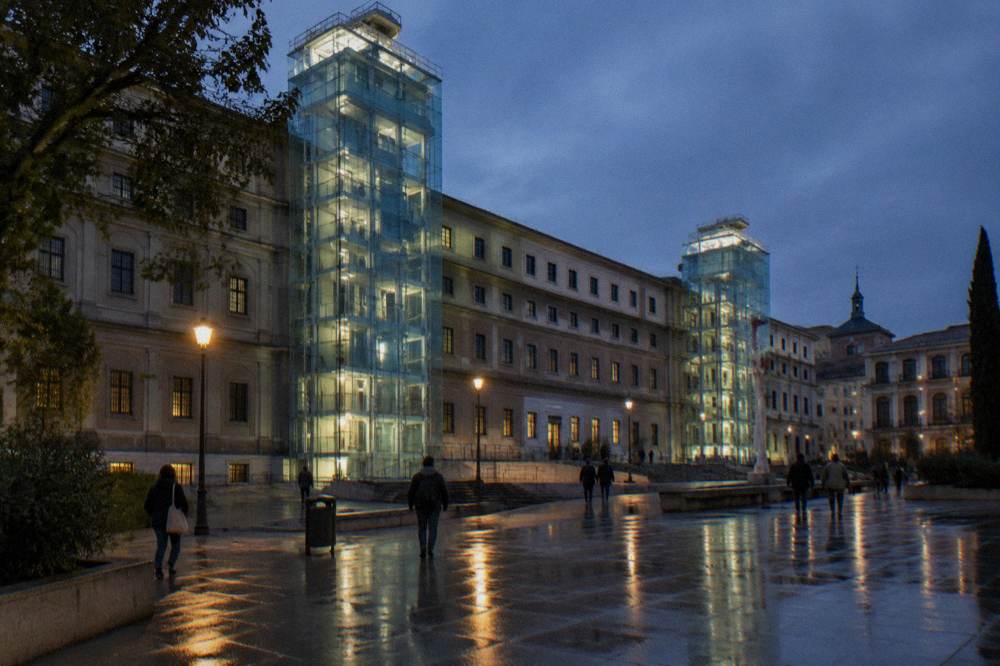
One practical point about the free window and the collection's layout: the entrance used by the free line is the same principal entrance on the Plaza del Emperador Carlos V, facing the Calle Atocha side. There is no separate free door, and no side entrance for the evening slot. The glass elevator towers on the outside of the old hospital building, which are the museum's most photographed feature, are the visual landmark to aim for when you walk down from the old town.
The walk itself is part of the value. From Puerta del Sol, the route down Calle Atocha passes the Plaza de Santa Ana, the Congress of Deputies and the Plaza de Neptuno, all free public sights in their own right, and takes about twenty minutes at a strolling pace. The Old Town Walk, Five Languages, a GuruWalk listing rated 4.92 out of 5 across 10,008 reviews, starts at Kilometer Zero in Puerta del Sol and finishes its route through the Habsburg streets, which puts you at the top of that Atocha walk with the museum evening still ahead of you.
Are The Retiro Satellite Venues Free Too?
Yes, both are free, with one large current exception. Reina Sofía runs two exhibition pavilions inside the Retiro park, Palacio de Velázquez and Palacio de Cristal, and both are free whenever they are open. However, Palacio de Cristal is closed for a major glass-and-iron renovation, wrapped in an artistic installation, with reopening targeted around July 2027. Palacio de Velázquez reopened in June 2026 after its own rehabilitation and is free and open now.
This is the freshness angle that most guides have not caught up with. Palacio de Cristal, the glasshouse that anchors half the postcards of the Retiro park, is a building site behind an artwork, and any itinerary that promises a free visit to it today is out of date. Palacio de Velázquez, the smaller brick pavilion a few minutes deeper into the park, quietly reopened after its own works and is once again hosting free contemporary exhibitions under Reina Sofía's programming.
The satellite venues matter for planning because they change the shape of a free day. The main museum's free window is in the evening, which leaves the daytime empty. The Retiro pavilions fill exactly that gap: a morning in the park, a free exhibition at Palacio de Velázquez, the Rosaleda rose garden and the park's other free corners, and then the evening slot at the main building. It is a full free art day that costs nothing but shoe leather. This stop sits on a free walking route, Retiro And Gran Vía Route.
The connection between the two sites is real, not just thematic. The museum's own site treats the Retiro pavilions as part of its visit, and the exhibitions there are usually tied to the collection's artists. Check the current programme before going, because the pavilions sometimes close between exhibitions for installation, which is a normal gap rather than a renovation.
How Does The Free Evening Slot Actually Work In Practice?
You queue, collect a free ticket and go through security, all at the main entrance. There is no advance booking for the standing free window, no app, no timed entry. The line forms outside the principal entrance about thirty minutes before the window opens, moves quickly once the desks start issuing tickets, and the whole process typically costs twenty to forty minutes at busy times. Capacity limits mean the line can be cut off before closing time.
That last point is the one that catches latecomers. Because the free entry is capacity-limited, arriving at 20:30 for a 21:00 close means risking a line that is no longer being served. The safe pattern is to be in the queue by 18:45 for the evening window, or by 12:15 for the Sunday slot. Locals treat the first thirty minutes as the calm part of the window, and the last hour as a rush.
What to bring: nothing sharp, no large bags, and no expectation of a cloakroom sprint. Security screening is the same for free and paid visitors. What not to bring: a rigid itinerary. The two-hour window rewards a single clear goal, usually the Guernica route, over an attempt to see everything. Visitors who try to cover the whole collection in the window leave frustrated; visitors who do the Sabatini floors leave happy.
The evening slot also has an underrated social side. The neighbourhood around the museum, Lavapiés, is where Madrid's tapas culture is at its most alive, and a 21:00 exit drops you exactly at dinner time in one of the best eating districts in the city. Finishing the free window and walking five minutes into Lavapiés for a standing vermouth is the local version of the museum café, at a fraction of the price.
For anyone building the whole day around free sights, the free one day Madrid itinerary sequences the old town, the Retiro and the museum evening into one walkable plan, and the budget overview on Free Things To Do In Madrid collects every conditionally free window in the city in one place.
Do You Still Need To Pay For Anything At Reina Sofia?
Only for the things that sit beyond the collection: some temporary exhibitions, guided visits and the audio guide. The standing free window covers the collection and most of the programming. Separately ticketed items, where they exist, are sold at the same desks, and the museum's general admission price applies outside the free windows. There is no hidden charge for the Guernica room, and no booking fee on the free ticket collected on site.
The clean way to think about it is that the museum is conditionally free, the same shape as the Prado and the Thyssen but with different windows. Each state museum in Madrid sets its own rule, and they are genuinely different: the Prado is free in its last two hours daily, the Thyssen runs a Monday midday slot for its permanent collection, and Reina Sofía runs the evening-plus-Sunday pattern described above. Treating them as one shared "free museum afternoon" is the most common planning mistake in the city.
For visitors who would rather pay for a calm, guided experience, the paid options are real and good, and the museum's own guided visits are the ones worth comparing against. But the free window is not a lesser product. It is the same building, the same paintings, the same rooms, at the price of a queue and a clock.
The one genuinely useful paid add-on is timing your visit around a walk that ends nearby. The Royal Palace And Theatre Walk, a GuruWalk listing rated 4.89 out of 5 across 1,976 reviews, covers the palace quarter and the theatre district on the other side of the centre, and the Retiro And Gran Vía Route, rated 4.98 out of 5 across 1,249 reviews on GuruWalk, finishes its route through the Gran Vía and Cibeles end of the city. Either pairs with a museum evening, depending on which half of Madrid your day has already covered.
Common Questions About Reina Sofia Free Entry
Is Reina Sofia Free?
Yes, conditionally. The museum is free Monday and Wednesday to Saturday from 19:00 to 21:00, and on Sundays and public holidays from 12:30 to 14:30. It is closed on Tuesdays. Five fixed dates a year, 18 April, 18 May, 22 May, 12 October and 6 December, are fully free all day. Free entry is for individuals, capacity-limited, with a ticket collected on site.
Do you need to book the free slot at Reina Sofia in advance?
No. The standing free windows operate on walk-up tickets collected at the museum's principal entrance. There is no advance booking for the general free slot, which is why the queue is the real constraint. Arrive thirty minutes before the window opens to be inside early.
Can you see the Guernica on the free ticket?
Yes. The free ticket covers the full collection, including the Guernica room and the Picasso studies that lead up to it, plus the Dalí and Miró floors. Free visitors walk the same rooms as paying visitors. Two hours is enough for the highlight route through the Sabatini building.
Why is Reina Sofia closed on Tuesdays?
Tuesday is the museum's standard weekly closing day, the same pattern as most large Madrid museums. Because the building is shut, no free window exists that day. Plan Tuesday for the Retiro park or the municipal museums, which have different schedules.
Are the Retiro park pavilions free as well?
Palacio de Velázquez is free and open, having reopened in June 2026 after rehabilitation. Palacio de Cristal is closed for a major renovation with reopening targeted around July 2027. Both are Reina Sofía venues, and both are free when open.
Is the Reina Sofia free window the same as the Prado's?
No, and the difference matters. The Prado is free in its last two hours every day it is open, which means an 18:00 start Monday to Saturday. Reina Sofía's evening window starts at 19:00, so the two can be combined on the same evening, with a ten-minute walk between them down the Paseo del Prado.