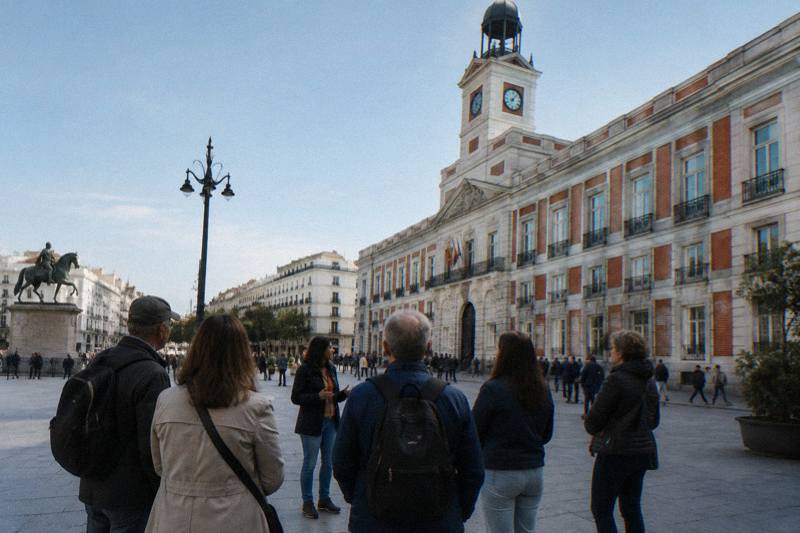
Is The Prado Museum Free?
Yes, partly. The Prado lets visitors in free for the last two hours every day it is open. Here is exactly how the window works, what it covers, and how to plan a day around it.
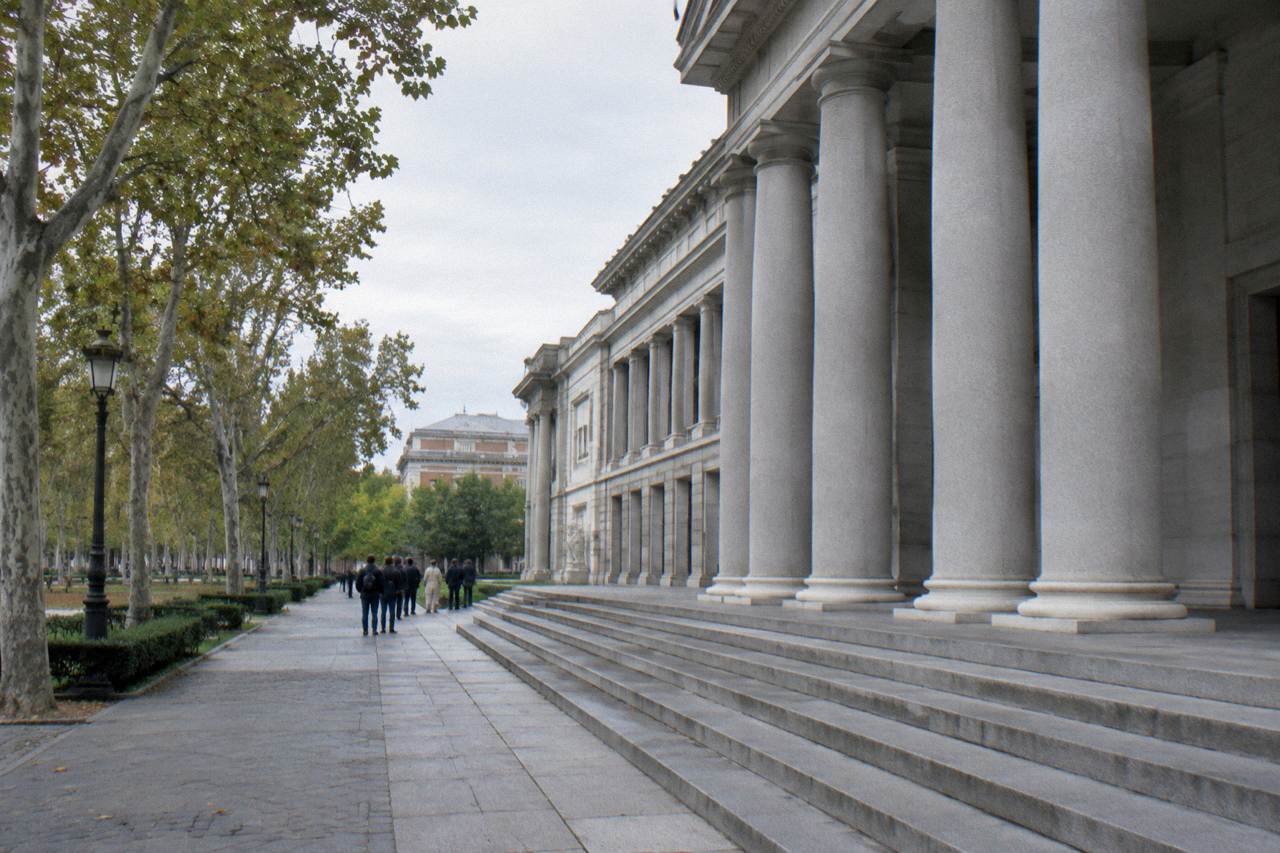
Madrid's most famous museum holds the city's most misunderstood free offer. People hear "the Prado is free" and picture a day of unlimited Velázquez; the reality is tighter, more specific, and still absolutely worth planning around. The window is real, it runs every single day the museum opens, and it has not changed in years. It just demands that you build your afternoon around it rather than your morning.
The scheme also sits inside a wider pattern that rewards a little reading. Madrid's state museums each run their own free window and no two windows are identical, the municipal network is free outright, and the Paseo del Prado corridor strings several of these options together on one walkable strip. Understanding where the Prado's rule begins and ends is mostly a matter of reading a clock and knowing which network you are standing in.
Is The Prado Museum Free?
Yes, for the last two hours of every opening day. From Monday to Saturday the free window runs 18:00 to 20:00; on Sundays and public holidays it moves earlier, to 17:00 to 19:00. Entry is walk-up only, limited by capacity, and covers the permanent collection rather than special exhibitions. No advance booking exists for the free slot, so arriving before the window opens matters.
That is the whole rule, and it is more generous than it sounds. Two hours is enough to see the Prado's core route if you are selective: the Spanish masters on the ground floor, the Flemish rooms, and the Italian galleries most visitors care about. The catch is that everyone else had the same idea, so the queue starts forming thirty to forty-five minutes before the doors open for the free slot.
A few practical details shape the experience. The free ticket is collected at the ticket office, not from a machine, so the line moves slower than a paid entry line. You cannot re-enter once you leave, so decide your route before you walk in. The collection-only rule means temporary exhibitions, which often carry their own ticket, are not part of the deal.
It is also worth knowing what kind of offer this is. The window is not a promotion that might quietly lapse; it is standing policy for the state museum network run by the Ministerio de Cultura, the same framework that gives the Reina Sofía, the Thyssen and the smaller state museums their own slots. You can plan a trip around an evening Prado visit months ahead without gambling on the offer surviving, which is more than most big-city free schemes can honestly promise.
| Day | Free window | Notes |
|---|---|---|
| Monday to Saturday | 18:00 - 20:00 | Last two hours before closing |
| Sundays and public holidays | 17:00 - 19:00 | Earlier close, earlier window |
| Reduced-hour days | No free slot | Certain days run a short schedule with no free window |
| Special exhibitions | Not included | Free entry covers the permanent collection only |
The official museum site carries the current schedules and any exceptions, and it is the one source to check before you go: the Prado's own visitor information. Our fuller walkthrough of the logistics, including which entrance to use and how the queue moves, is in the Prado Museum free hours guide.
If you are building the whole day around it, a pay-what-you-want walk is the natural morning half of the plan. These three cover the ground most people want before an evening in the galleries:
How Does The Free-Entry Window Work In Practice?
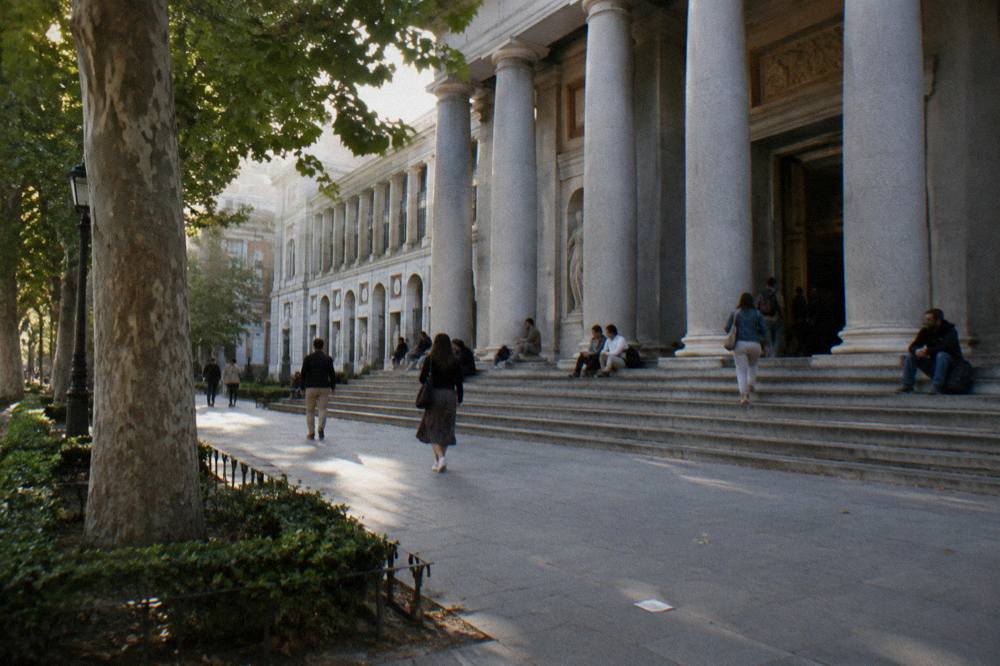
Arrive by 17:15 on a weekday and you will almost certainly get in. The queue forms outside the ticket pavilion, moves in a single line, and stops dead when capacity is reached, which happens on busy evenings. The window closes to newcomers at 19:00 on weekdays, so a 18:45 arrival is a gamble. Sundays shift everything an hour earlier.
The single biggest mistake is treating the free slot like a drop-in. Capacity is real, and on summer evenings, holiday weekends, and any day with a major temporary exhibition, the line can outgrow the slots. Locals know the rhythm: come early, accept that you will stand for twenty or thirty minutes, and use the wait to plan your route on the free floor plan by the entrance.
Inside, the two-hour limit changes how you look at art. Instead of drifting, most free-window visitors follow a loop: Goya's black paintings, Las Meninas, the Velázquez portraits, then the Bosch room if time allows. That loop is genuinely doable in ninety minutes at a brisk pace. The museum's layout, a central spine with galleries off both sides, makes a self-imposed route easy to keep. Budget the time in blocks: ten minutes to get oriented once past the desk, ninety for the loop itself, and the remainder for whatever room pulled you off course.
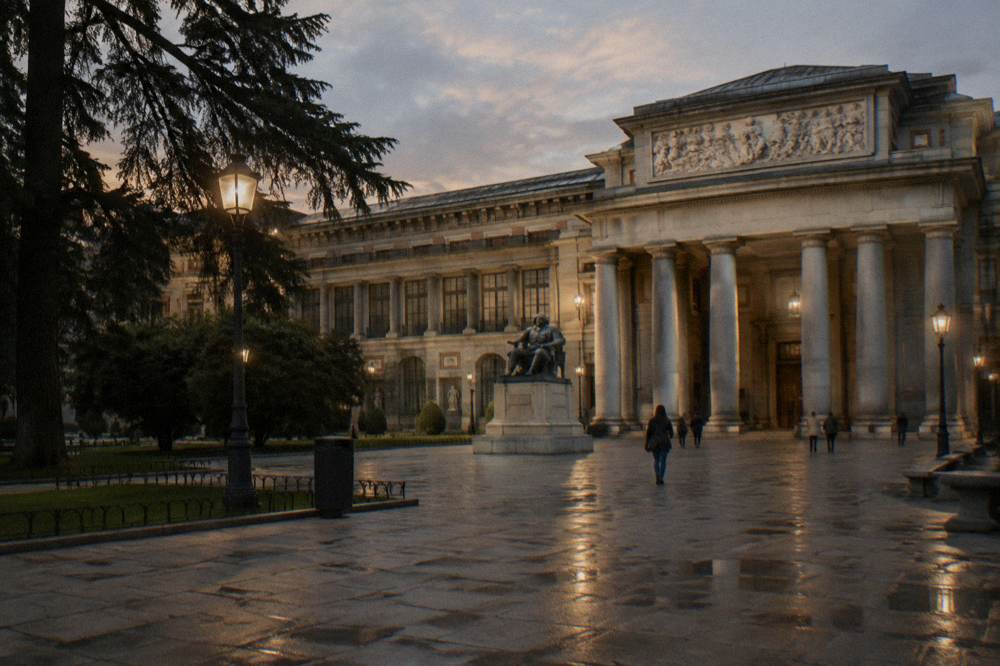
Have a fallback ready. If the queue has clearly outgrown the room by the time you join it, a paid ticket for another day is the clean escape, and the evening is not lost either way. The building's exterior, the Paseo del Prado after dark, and the stretch down toward the Neptune fountain all cost nothing and need no ticket at all. Some visitors treat the paid entry as insurance and the free window as the bonus, which is a reasonable frame if your museum time is limited to one trip.
There is a second, quieter angle worth knowing. The museum sits inside the Paseo del Prado corridor, a walkable strip that also holds the Real Jardín Botánico, the CaixaForum building, and the Retiro park boundary. Everything except the paid exhibitions in that strip can be done for nothing on the same afternoon, which is why we suggest pairing the walk with the window rather than treating the museum as a standalone trip.
Where Should You Go Before The Free Window Opens?
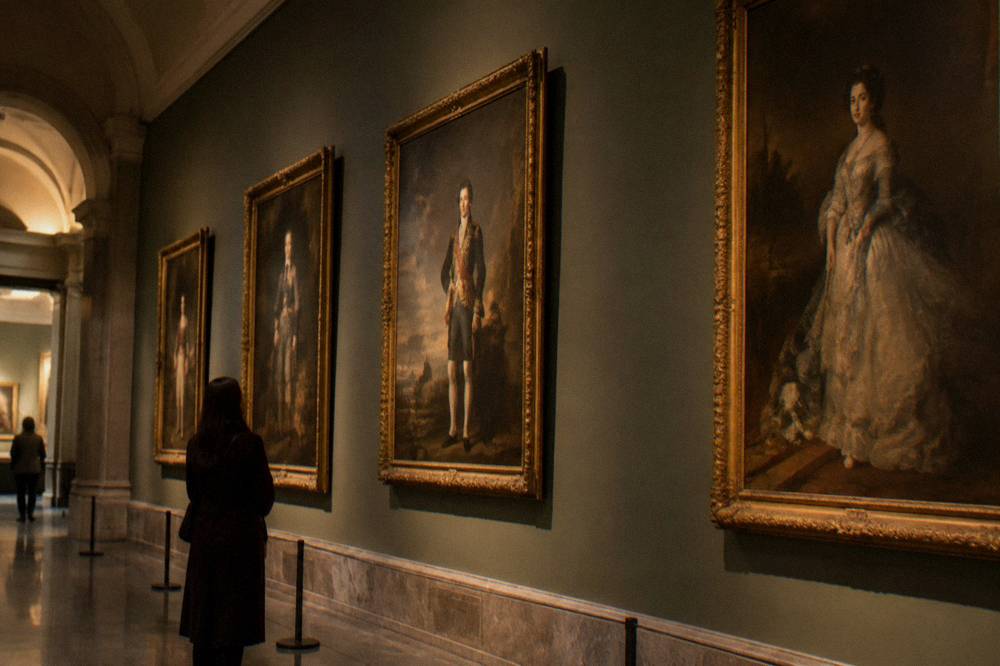
Start in the historic core, walk north through the Austrias neighbourhood, and arrive at the museum by late afternoon. Plaza Mayor, Puerta del Sol, and the streets between them take about two hours at walking pace, and a guided free walk covers the same ground with the stories attached. The geometry works: the old town connects to the museum by a flat, direct stroll.
The Original Free Tour is the most direct fit. It runs 2 hours 30 minutes in English and Spanish, meets at Plaza Mayor in front of the Tourist Information Centre, and is rated 9.3 out of 10 across 21,435 freetour.com reviews, the largest review pool of any walk on our Madrid roster. It finishes in the late morning or early afternoon depending on the departure you pick, which leaves time for lunch in La Latina before strolling down to the museum.
If you would rather start from Sol itself, the Old Town Walk, Five Languages covers the same historic district with the largest GuruWalk review pool in the city: rated 4.92 out of 5 across 10,008 GuruWalk reviews, meeting at Kilometer Zero in the centre of Puerta del Sol under the Tio Pepe sign. It runs 2 hours 15 minutes and operates in English, Spanish, French, Italian and Portuguese, a useful spread if your group is mixed. The GuruWalk listing is pay-what-you-want, same as every walk on this site.
Lunch fills the gap neatly. La Latina and Lavapiés, both south of the museum corridor, are the classic midday neighbourhoods, and browsing the Mercado de San Miguel costs nothing if you only want to look. Aim to finish eating by mid-afternoon, drift down toward the Paseo del Prado without hurrying, and you reach the queue with margin to spare instead of arriving flushed and halfway down the block.
Either walk hands you the same thing: a morning of Habsburg Madrid, a long lunch, and a museum evening that costs nothing. The free one-day Madrid itinerary runs this exact shape end to end if you want the full timetable.
What Other Free Museums Are Near The Prado?
The Reina Sofía is the closest true alternative, free for its last two hours on Monday and Wednesday to Saturday from 19:00 to 21:00, and from 12:30 to 14:30 on Sundays, closed Tuesdays. The Thyssen offers free permanent-collection entry on Mondays from 12:00 to 16:00. Both sit on the same Paseo del Prado corridor as the Prado, so the strip holds three of Spain's top museums with three different free rules.
That last point matters more than most guides admit. The three museums do not share a free schedule, and treating them as one "free museum district" is how people end up at a closed door. The Prado window is evening-only; the Thyssen's permanent-collection slot is Monday midday; the Reina Sofía splits its window between weekday evenings and Sunday lunchtime. The official ticketing site spells out the Reina Sofía conditions, including the individuals-only rule and the fixed bonus dates: the Reina Sofía free-entry page.
| Museum | Free window | Days | Catch |
|---|---|---|---|
| Museo del Prado | Last two hours (18:00-20:00) | Monday to Saturday | Walk-up only, collection only |
| Museo del Prado | Last two hours (17:00-19:00) | Sundays and holidays | Earlier, busier |
| Museo Reina Sofía | 19:00-21:00 | Mon, Wed to Sat | Closed Tuesdays, individuals only |
| Museo Reina Sofía | 12:30-14:30 | Sundays | Same capacity limits |
| Museo Thyssen-Bornemisza | 12:00-16:00 | Mondays | Permanent collection only |
The Reina Sofía also runs a small number of fully free days, including 18 April, 18 May, 12 October and 6 December, when the whole building opens without the evening squeeze. Those dates suit travellers who want Guernica at a relaxed pace rather than a two-hour dash, though they draw their own crowds.
One distinction that trips up almost everyone: Madrid runs two museum networks with opposite rules. The state museums, including the Prado, each set their own free window, and no two windows are identical. The municipal network is different. Museo de San Isidro and Museo de Historia de Madrid are free general admission year-round, no conditions, no clock to beat. Blending the two into a single "check the free hours" rule is how visitors end up queuing for something that never had a window, or paying for something that was free all along.
Beyond the big three, the smaller state museums run their own windows: the Romanticismo, Cerralbo and Arqueológico Nacional open free from 14:00 on Saturdays and all day Sunday, with Cerralbo adding Thursday evenings. Those are a different neighbourhood and a different pace, covered in our guide to Madrid's free and budget museums. If your question is specifically about the Reina Sofía's rules, the is the Reina Sofía free post breaks that museum down on its own.
What Else Is Free Within Walking Distance Of The Prado?
Plenty, and most of it sits on the same walkable strip. The Real Jardín Botánico, directly opposite the museum, is free on Tuesday mornings from 10:00 to 13:30. Retiro park is free to enter, with the Palacio de Velázquez pavilion open and free since its 24 June 2026 reopening. CaixaForum on the same block charges EUR 6, and the Cibeles rooftop viewpoint costs about EUR 4, so read the fine print before joining any line.
The botanical garden is the sleeper pick. Its Tuesday-morning window is the only free slot it runs, and it lands directly across the Paseo del Prado from the museum, which makes for an unusual but workable Tuesday: plants in the morning, a long lunch, Velázquez in the evening. The rest of the week the garden charges standard admission, so the pairing only works one day in seven.
Retiro sits at the top of the corridor. The park itself is free, full stop, and it carries two exhibition pavilions with opposite stories right now. The Palacio de Velázquez reopened on 24 June 2026 after its own rehabilitation and is free to enter, a genuinely fresh fact that most competing guides have not yet caught. Its more famous sibling, the Palacio de Cristal, is closed for a roughly EUR 7.5 million glass and ironwork renovation, wrapped in an artistic installation titled Fardo, and targeted to reopen around July 2027. Anyone planning a Retiro visit around the glass palace needs to replan around the brick one.
Two caution flags finish the corridor. CaixaForum, on the same block as the botanical garden, charges EUR 6 general entry and is free only on fixed annual dates, with San Isidro, International Museum Day and the Almudena feast day among them, plus eligible groups such as under-16s. And at Palacio de Cibeles, the CentroCentro cultural centre inside the building is free while the Mirador Madrid rooftop at the top of the same building costs about EUR 4. Same address, two products, two different answers, which is a fair summary of free Madrid generally.
What Mistakes Cost People The Free Slot?
Three errors account for nearly every missed free entry: arriving after the queue has already exceeded capacity, expecting to book the free ticket online when no such booking exists, and assuming the window applies on reduced-hour days when it does not. Each is avoidable with a clock and a floor plan. The fourth, planning a rushed route instead of a loop, wastes the time you saved.
The booking assumption deserves its own warning. Paid tickets can be bought online, and this misleads people into searching for a free ticket reservation. There isn't one. The free slot is a physical queue at the ticket office, full stop. If standing in line for half an hour is worth more to you than the paid ticket price, buy online and skip the whole question.
The reduced-hour trap catches visitors on certain days when the museum runs a short schedule and the free window simply does not run. These days are rare but they exist, and they are listed on the museum's own site rather than in any third-party summary. A thirty-second check the morning of your visit is the entire defence. Build it into breakfast.
Run the timing honestly as well. Half an hour of queue, two hours inside, the walk back: the evening is gone, and that is fine, because Madrid eats late by design. The mistake is scheduling anything between 17:30 and 21:00 that cannot move. Treat the free slot like a fixed reservation you did not pay for, and the rest of the night arranges itself around it.
Finally, do not over-schedule the evening. Two hours at the Prado plus a queue plus the walk back is a full late afternoon. Trying to bolt on the Thyssen's Monday slot on the same day, or a sit-down dinner in Chueca before the galleries, tends to collapse. Pick one anchor per evening. This is the same planning logic behind Free Things To Do In Madrid: one solid free anchor, a walk between, and no more.
Which Free Walk Pairs Best With A Museum Evening?
The Original Free Tour, for most visitors. It has the largest review pool of any walk we track, 21,435 freetour.com reviews at 9.3 out of 10, it runs in both English and Spanish, and its Plaza Mayor start puts you in the historic core with the whole afternoon left after it ends. GuruWalk alternatives suit specific cases: five-language groups, shorter walks, or small-group formats.
The GuruWalk side of the roster is deep. The Royal Palace And Theatre Walk is rated 4.89 out of 5 across 1,976 GuruWalk reviews and runs 2 hours 30 minutes from Puerta del Sol, leaning into the palace quarter. The Retiro And Gran Vía Route, rated 4.98 out of 5 across 1,249 GuruWalk reviews, ends closer to the museum corridor, which matters if you want the walk and the window to flow into one another without a metro ride between.
If you want a shorter, tighter morning, History And Secrets Essentials runs 2 hours from Plaza Mayor and is rated 4.82 out of 5 across 340 GuruWalk reviews. OgoTours Small-Group Essentials caps numbers and sits at 4.93 out of 5 across 174 GuruWalk reviews, worth it when crowds have already tested your patience. The 2-Hour Historical Center Walk, 4.76 out of 5 across 200 GuruWalk reviews, starts at Plaza del Callao under a purple umbrella and suits a Gran Vía-side hotel. All of them are pay-what-you-want, all of them finish by mid-afternoon at the latest, and any of them slots in front of an 18:00 museum arrival.
Choose by language and duration before anything else. The Original Free Tour's two languages suit most travellers; the Old Town Walk's five suit mixed groups and Italian or Portuguese speakers, who often find fewer options in Madrid; the two-hour formats fit a slower morning when the queue is still hours away. Meeting points cluster along the Sol-to-Callao axis, which keeps the entire day inside one walkable rectangle, museum included.
Common Questions About The Prado Museum Free Entry
Is The Prado Museum Free?
Partly. Entry is free for the last two hours of every opening day: 18:00 to 20:00 Monday to Saturday, and 17:00 to 19:00 on Sundays and public holidays. The free ticket covers the permanent collection only, is walk-up only, and is limited by capacity.
Can you book the free Prado ticket online?
No. There is no online reservation for the free window. Paid tickets can be bought in advance, but the free slot is a physical queue at the ticket office, and it stops when capacity is reached.
Is the Prado free on Sundays?
Yes, for two hours. On Sundays and public holidays the window runs 17:00 to 19:00, one hour earlier than on weekdays, because the museum closes earlier. Expect a longer queue than on a weekday evening.
Are special exhibitions included in the free entry?
No. The free ticket covers the permanent collection. Temporary exhibitions carry their own separate ticket and are not part of the free window.
How long should I queue for the free slot?
Plan to arrive thirty to forty-five minutes before the window opens. On busy evenings and holiday weekends the line can exceed capacity, so earlier is the only reliable margin.
Can you combine the Prado with other free museums the same day?
Only with careful timing, since the three big museums on the Paseo del Prado run different free schedules. The Thyssen's permanent-collection slot is Monday midday, the Reina Sofía's window is weekday evenings and Sunday lunchtime, and the Prado's is daily at closing time. Pick one anchor per day.